Drainage & Site Water
Water Problems Usually Start With Understanding the Site
Drainage problems are rarely solved well by choosing a drain first. The useful starting questions are usually where the water is coming from, how much water is involved, where it naturally wants to go, what is preventing it from getting there, and where it can be moved or managed without creating another problem.
Living Earth evaluates drainage as part of the larger property system—grade, soil, roof water, hardscape, access, retaining, planting, neighboring elevations, and existing drainage all matter.
Rainwater Capture: From Roof to Irrigation
This Living Earth installation brings runoff from multiple downspouts into one rainwater-storage system. Catch basins provide initial sediment separation. Water then reaches a buried sump beside the tank, which provides a final sediment-settling point before a float-controlled pump lifts it into storage. A separate above-ground booster pump supplies the irrigation system through filtration.
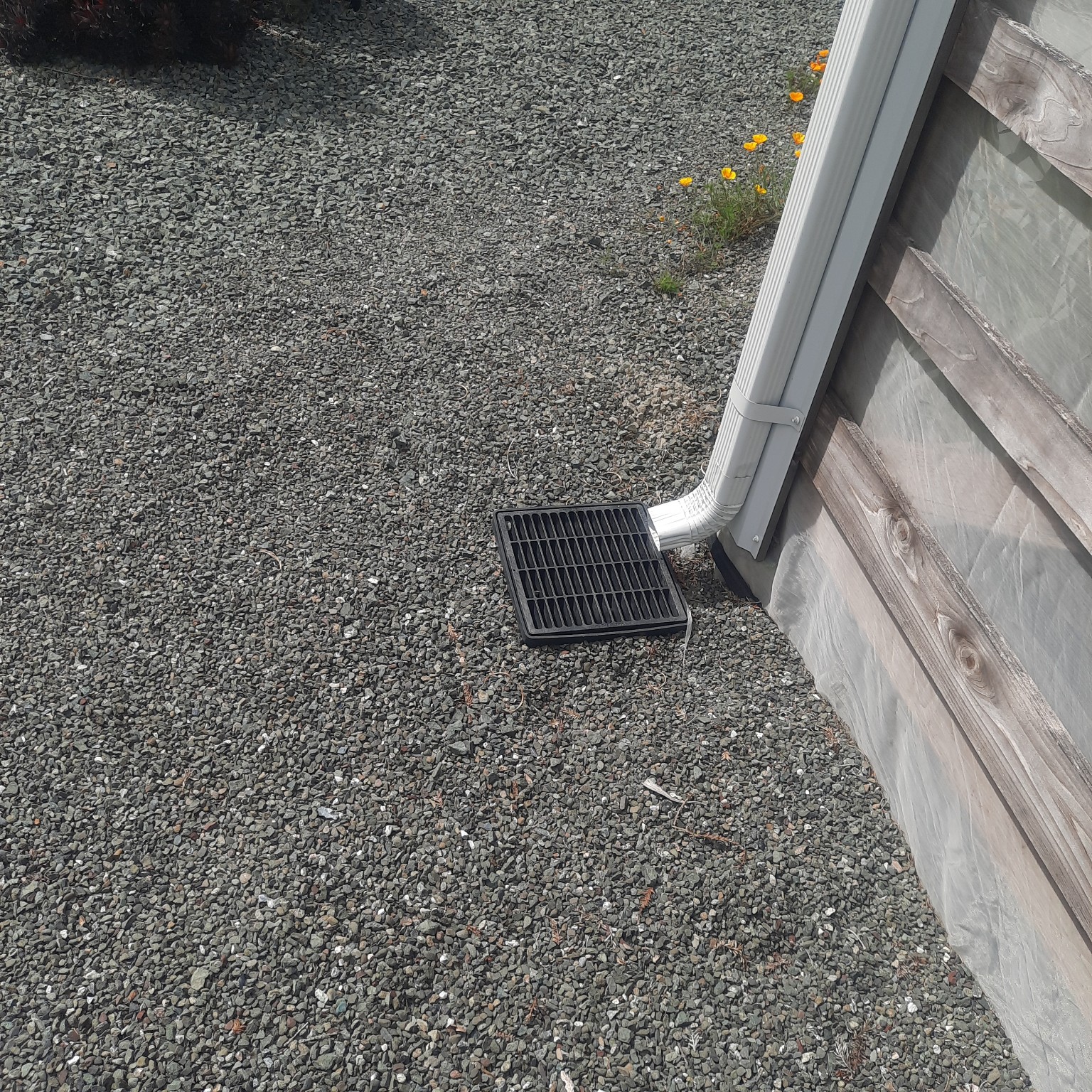
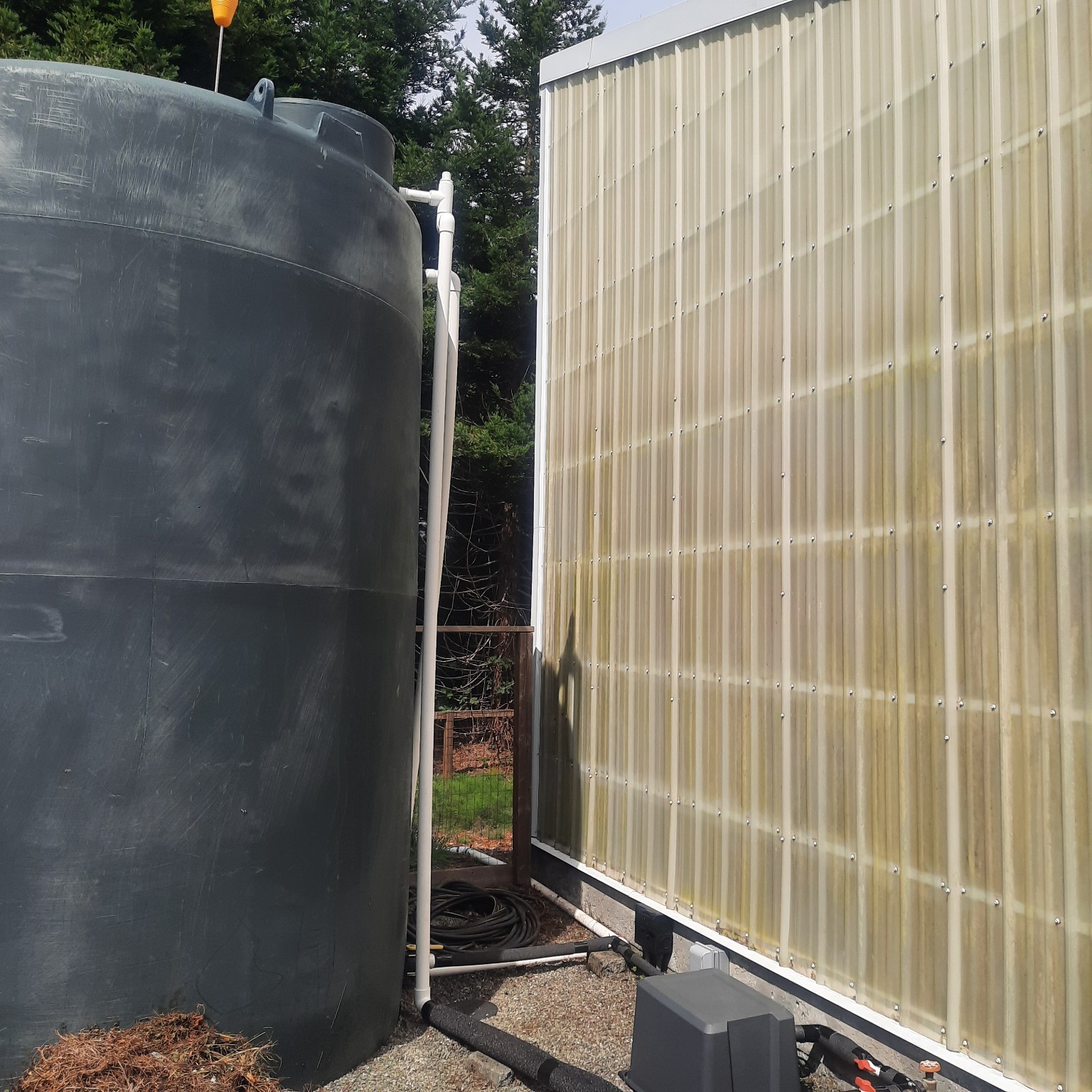
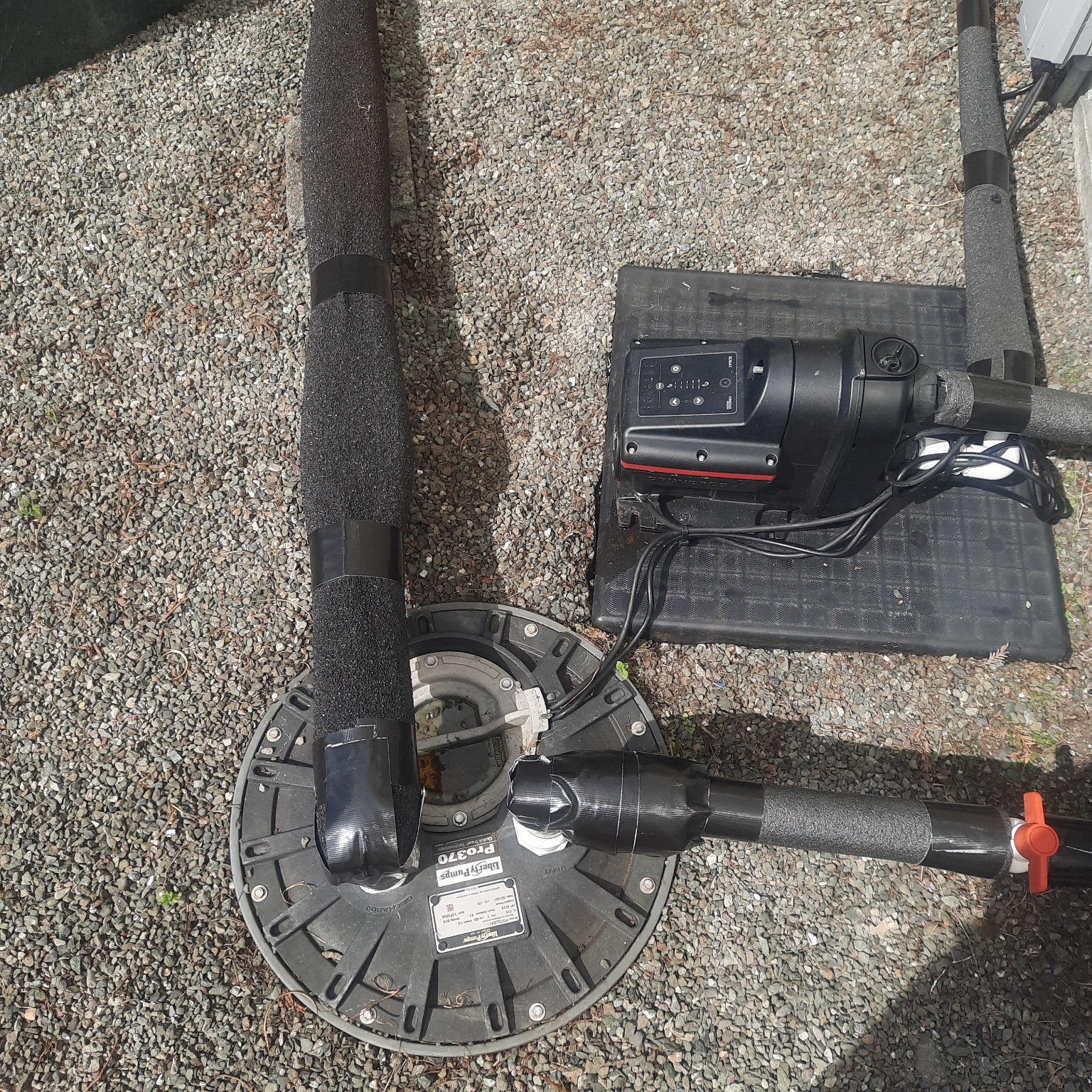
Collected sediment must be removed periodically so the basins retain their settling capacity and the system remains serviceable.
Start With the Water, Not the Product
A catch basin, French drain, dry well, sump pump, swale, or buried pipe can all be useful tools. None of them is automatically the right answer.
Before selecting a solution, Living Earth looks at:
- the source of the water
- grade and flow direction
- roof and downspout discharge
- soil conditions
- surface versus subsurface water
- existing hardscape
- retaining conditions
- access
- neighboring properties
- and where collected water can safely go
The goal is not simply to make water disappear from one spot. It is to manage it without moving the problem somewhere else.
Common Drainage Problems
Standing Water
Low areas, compacted soil, poor grading, or insufficient drainage can leave water sitting where it affects lawns, planting, paths, structures, or usable yard space.
Roof Water
Downspouts may discharge too close to foundations, onto walkways, into planting beds, or onto slopes that cannot absorb the concentrated flow.
Runoff Across Hardscape
Driveways, patios, walkways, and other hard surfaces can concentrate water and send it toward doors, garages, neighboring property, or lower landscape areas.
Hillside & Slope Water
Water moving across or through slopes can contribute to erosion, saturated soils, planting problems, and difficult access.
Wet Planting Areas
A planting problem may actually be a grading or drainage problem rather than a plant-selection problem.
Gravel Roads & Access
Road crowns, ditches, culverts, water bars, and surface grading all influence whether water leaves a road efficiently or damages the surface over time.
Drainage Tools May Include
- downspout piping
- catch basins
- channel drains
- French drains
- dry wells
- sump pumps and discharge routing
- swales
- rain gardens
- grading corrections
- ditch clearing or reshaping
- gravel-road grading
- water bars
- surface drains
- erosion-control measures
- planting and soil strategies
- equipment-assisted grading and boulder placement
The specific combination depends on the site.
Matching the Drainage Approach to the Site
Surface runoff, subsurface moisture, and opportunities to capture rainwater call for different approaches. These illustrations explain common concepts; the appropriate combination depends on the property and where the water can safely go.
Swales and surface-water routing
Tap or click the illustration to enlarge.
Catch basins and solid drainpipe
Tap or click the illustration to enlarge.
Foundation and subsurface drainage
Tap or click the illustration to enlarge.
Dry wells and infiltration
Tap or click the illustration to enlarge.
Pumped drainage
Tap or click the illustration to enlarge.
Concept illustrations—not construction plans. Suitability, sizing, elevations, discharge arrangements, and applicable requirements must be evaluated for the site.
Surface Water and Subsurface Water Are Different Problems
Water visibly flowing across the ground may require a different approach than water moving through saturated soil.
Surface Water
Surface problems may sometimes be improved through:
- grading
- swales
- channel drains
- curb or edge changes
- hardscape adjustments
- or better routing of roof water
Subsurface Water
Subsurface conditions may involve:
- interception
- drainage aggregate
- perforated pipe
- sump systems
- dry wells
- or other strategies depending on site conditions
Correctly identifying the type of water problem can prevent unnecessary excavation and ineffective drainage work.
Roof Water Is Often More Significant Than It Looks
A roof collects a large volume of water and concentrates it into relatively few discharge points. Where downspouts terminate can affect foundations, walkways, planting, slopes, patios, driveways, and neighboring areas.
Sometimes the most effective drainage improvement is simply getting roof water to a better destination before it becomes a landscape problem.
Hardscape Changes the Way Water Moves
Patios, walkways, driveways, retaining walls, and other hard surfaces change drainage patterns. That means drainage should be considered before hardscape is installed—not after water begins collecting against the finished work.
Relevant considerations may include:
- finished elevations
- slope
- channel drains
- surface collection
- dry wells
- retaining-wall drainage
- transitions between surfaces
- and where runoff exits the property
Dry Wells Can Be Useful—When the Site Supports Them
A dry well creates underground storage so collected water can disperse gradually into surrounding soil. They can work well in appropriate conditions, but they are not magic holes.
Performance depends on factors such as:
- soil permeability
- groundwater
- incoming water volume
- available space
- overflow planning
- and where the system is located
Sometimes Slowing Water Is Better Than Piping It Away
Not every drainage problem requires buried pipe. Where space and grade allow, shallow swales, planted depressions, rain gardens, and other surface strategies can:
- slow runoff
- spread water
- encourage infiltration
- reduce erosion
- and become part of the landscape rather than hidden infrastructure
Water Management Can Become Part of the Landscape
Not every larger drainage solution has to disappear underground.
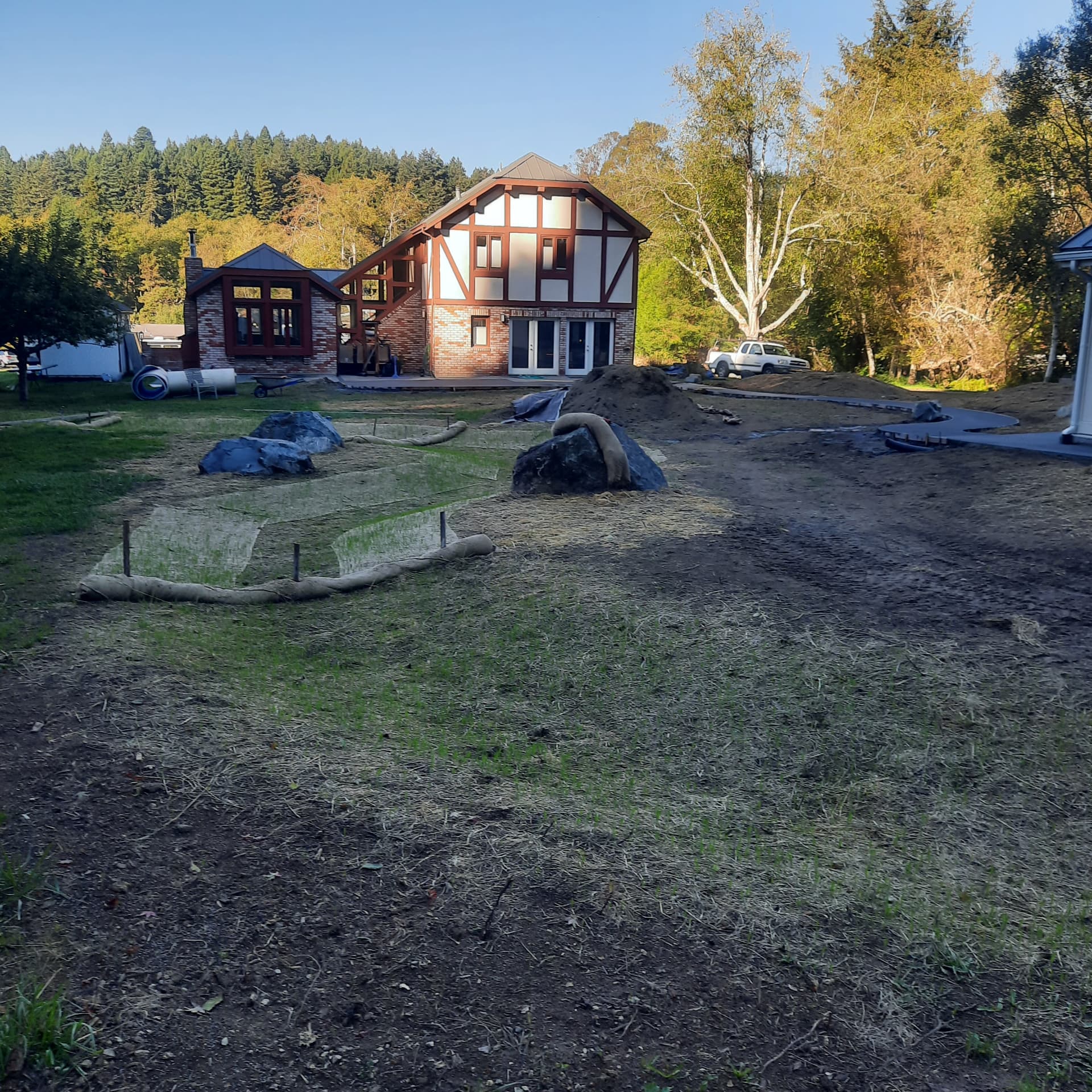
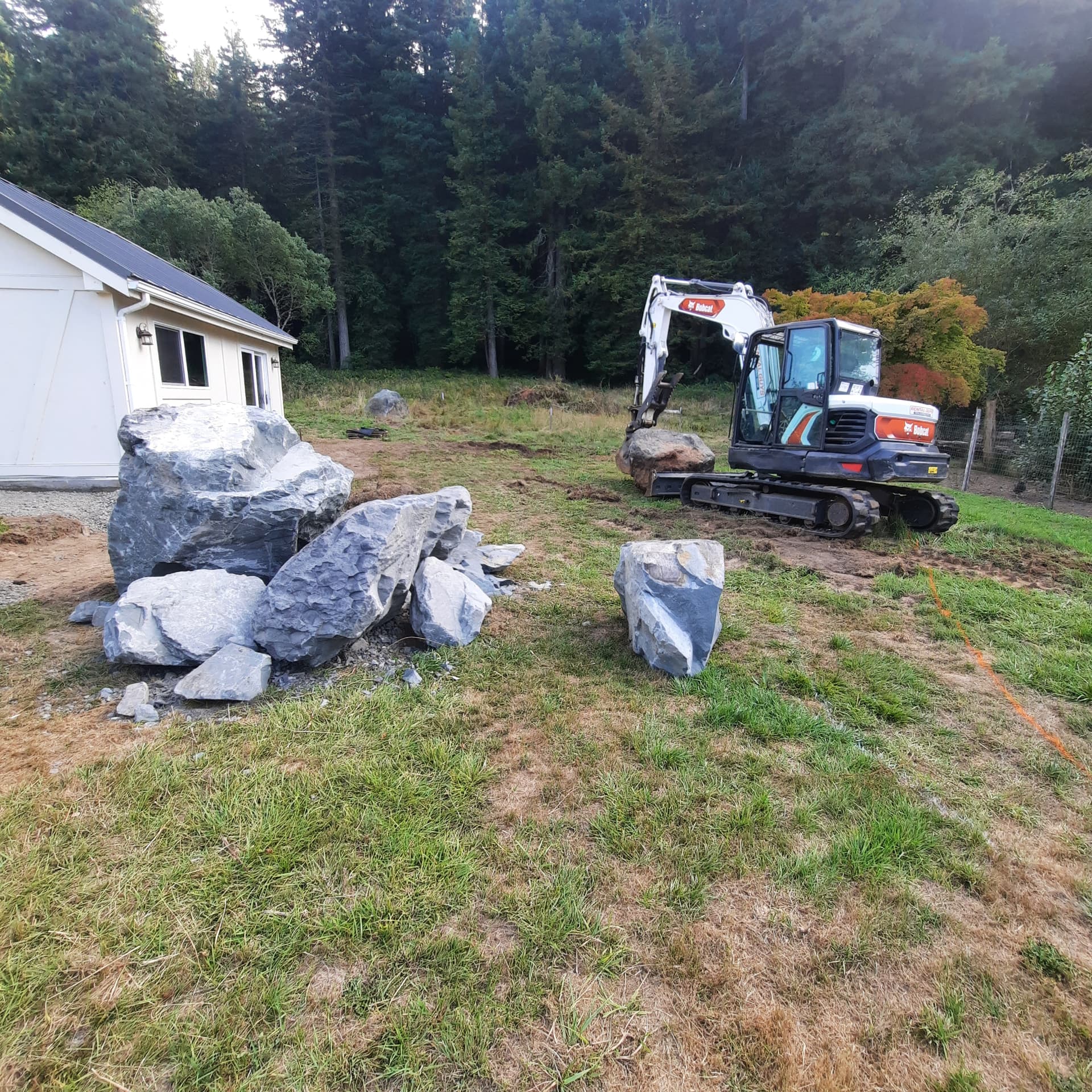
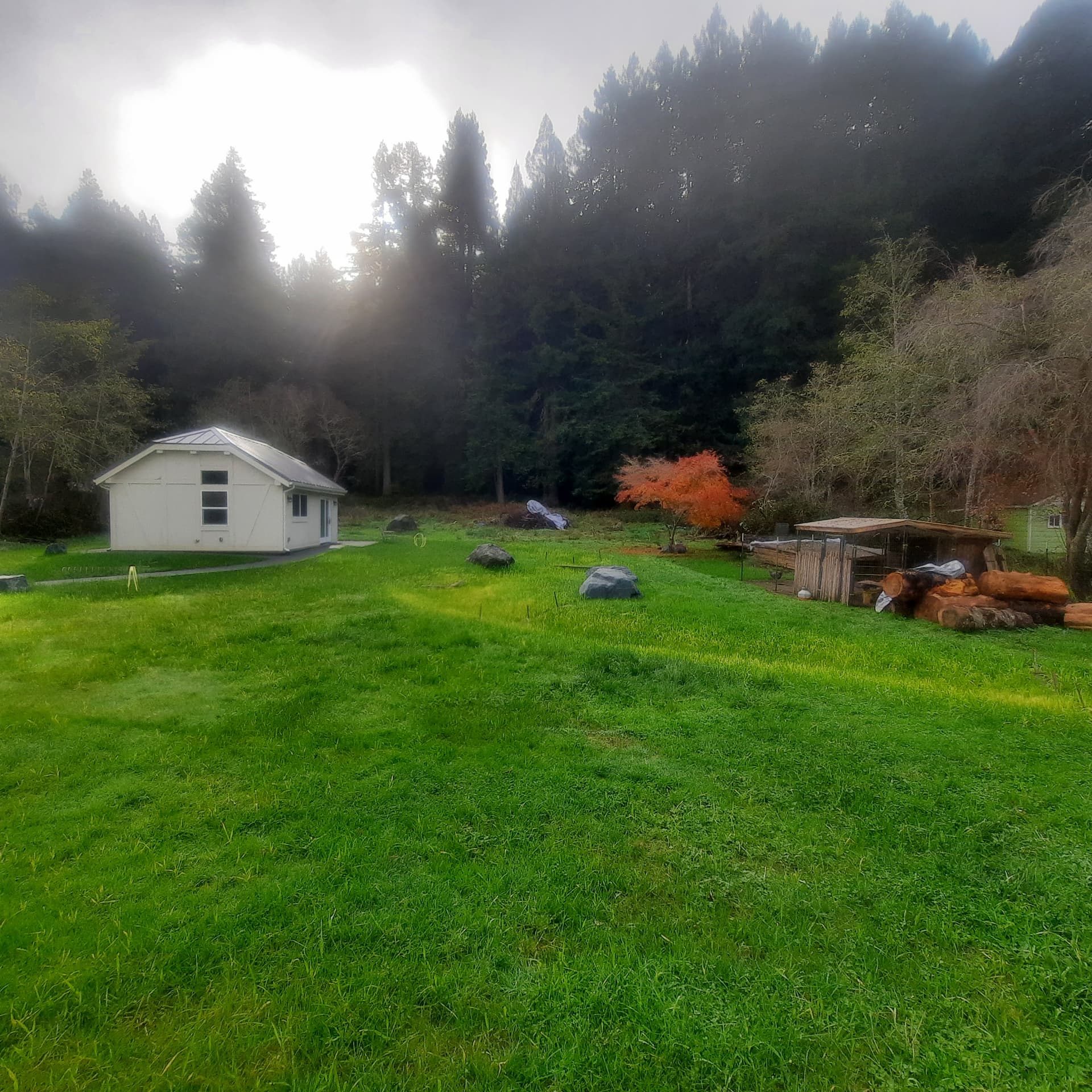
On some properties, grading, excavation, swales, collection areas, rock placement, and planting can be combined so the water-management system also becomes part of the finished landscape.
This may include:
- reshaping low areas
- creating broad collection zones
- equipment-assisted grading
- boulder placement
- stabilizing disturbed soil
- and integrating the finished work with lawn, planting, or other landscape areas
Function comes first: move, slow, store, or disperse water appropriately. Where the site allows, the finished drainage work should also feel like part of the property rather than exposed infrastructure.
Roads and Larger Sites Need Water Management Too
On larger properties, water can damage access long before it creates a conventional “wet yard.” Living Earth may address:
- road grading
- crown
- ditching
- water bars
- culvert approaches
- gravel displacement
- runoff crossing roads
- and directing water away from vulnerable surfaces
The goal is to give water an intentional path rather than allowing it to create one.
Drainage Rarely Stays in One Category
Drainage may affect hardscape, planting, irrigation, decks and stairs, retaining walls, pond areas, driveways, fencing, access, and future construction.
This is one reason Living Earth evaluates drainage within the larger property rather than treating it as an isolated pipe-installation service.
Sometimes the Existing System Can Be Improved
Older drainage systems are not always failures simply because they are old. A useful evaluation may determine that the real issue is:
- a blocked outlet
- a damaged section
- settlement
- poor maintenance
- an undersized collection point
- a changed landscape
- or water that was added to the system later
Where practical, repair or modification may make more sense than removing everything and starting over.
What a Site Consultation Can Help Determine
- likely water source
- visible grading problems
- drainage priorities
- practical collection points
- possible discharge locations
- relationship to hardscape or structures
- whether work should be phased
- whether another professional should be involved
- and whether the problem can reasonably be addressed through landscape/site work
When Another Professional May Be Needed
Some drainage and site-water conditions require information or authority beyond ordinary landscape and site work. Depending on the property and problem, that may include civil engineering, geotechnical evaluation, surveying, structural review, septic expertise, permitting, or other licensed professional input.
Living Earth’s role is practical site evaluation and implementation within appropriate scope—not replacing engineering, surveying, septic, structural, permitting, or legal determinations where those are required.
A Simple Example: Finish the Driveway, Solve the Water First
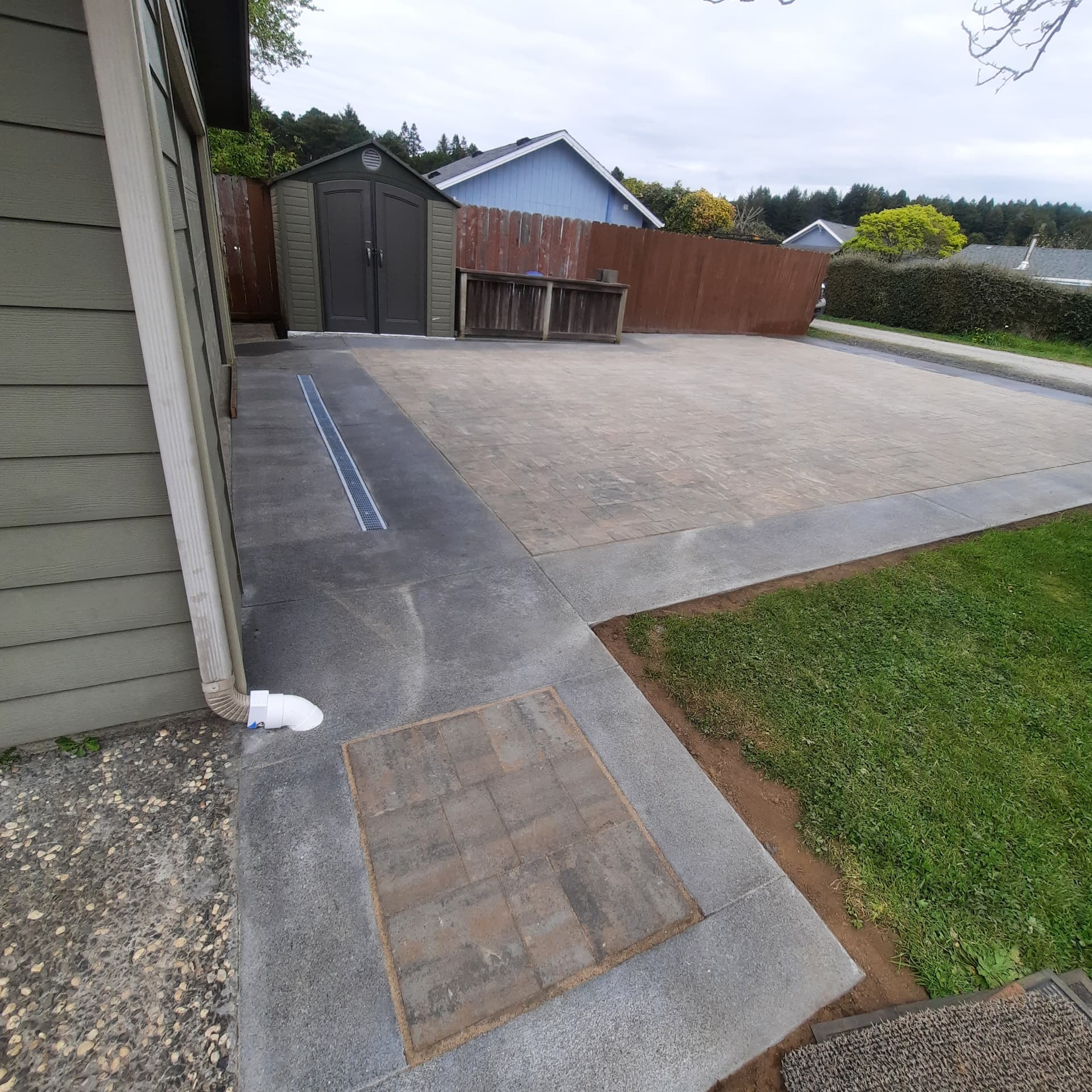
An older gravel driveway was ready for a finished hard surface after the front of the property had already been improved.
The drainage issue was addressed as part of the design rather than afterward. A channel drain was incorporated into the new driveway and routed to a dry well, allowing the property improvement and runoff management to be solved together.
Start With the Site
If you already know the drainage work you need, start with a project request. If the cause or best solution is still unclear, a site consultation can help define the problem before construction begins.
For questions not answered here, start with Consulting & Site Assessment.
Good drainage begins by giving water somewhere sensible to go.