
Deck Repair, Renovation & Replacement
Sometimes Repair Is the Right Answer. Sometimes It Is Time to Start Over.
Decks usually do not fail all at once. Wear, moisture, fasteners, flashing, post bases, stairs, railings, framing, and connections may age at different rates.
That means an older deck should not automatically be replaced simply because one component has failed. It also means repeated small repairs are not always the smartest investment when deterioration has reached the larger structure.
Living Earth evaluates what is actually failing, what still has useful life, and what level of work makes sense for the property.
A Deck Can Look Better—or Worse—Than It Really Is
Surface appearance alone does not tell the whole story. A deck may look tired while the underlying framing remains serviceable. Another deck may look acceptable from above while hidden decay is developing around:
- ledger connections
- beam ends
- post bases
- stair attachments
- flashing
- fasteners
- trapped debris
- or areas where water repeatedly collects
The useful question is not “How old is the deck?” It is “What condition are the important components actually in?”
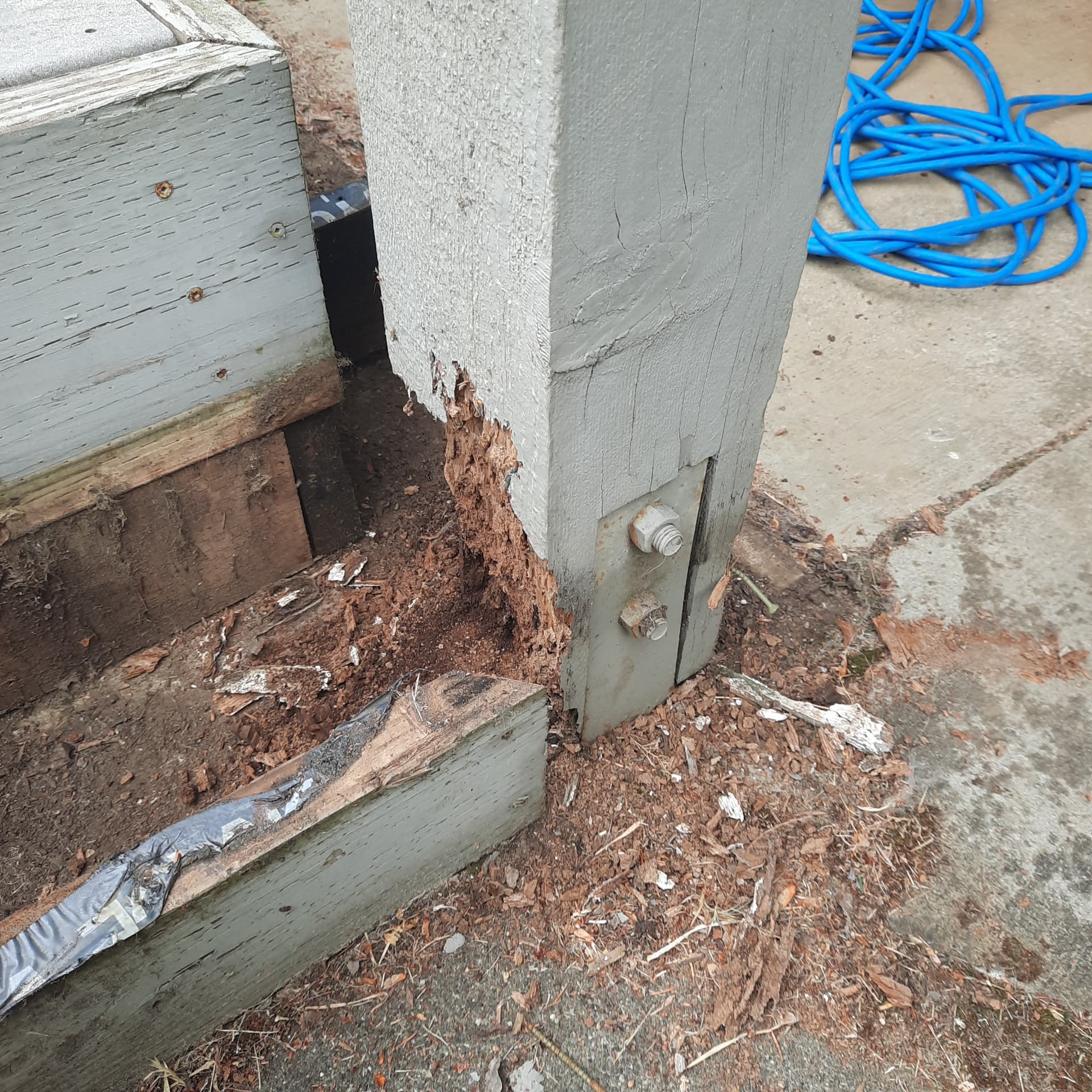
Where Problems Commonly Develop
- Post Bases
- Wood near grade, concrete, soil, or repeated moisture exposure can deteriorate long before the rest of the post.
- Ledgers & House Connections
- Improper flashing, trapped water, or older construction details can create hidden damage where the deck meets the building.
- Beam Ends & Joists
- End grain and concealed connections can hold moisture and develop localized decay.
- Stairs
- Stairs often age differently from the main deck because of greater exposure, movement, stringer condition, lower contact points, and frequent use.
- Railings
- Loose posts, outdated construction, rot, or changing use requirements may make railing work part of a larger renovation.
- Decking
- Surface boards may fail while the framing remains useful—or remain visually acceptable while the structure below needs attention.
Repair Makes Sense When the Structure Is Still Worth Saving
Selective repair may be appropriate when:
- deterioration is localized
- the overall framing remains sound
- access allows the failed area to be corrected properly
- the repair will meaningfully extend service life
- and the cost of repair remains reasonable compared with replacement
Examples may include replacing a damaged post section, rebuilding isolated stair components, correcting localized rot, replacing failed trim, repairing railing, or replacing selected decking.
The goal of repair is not to make an old structure look new. It is to extend the useful life of what remains worth preserving.
There Is a Point Where More Repair Stops Being Good Value
Complete replacement may be the better choice when:
- deterioration is widespread
- major structural components are compromised
- previous repairs have accumulated
- access to damaged areas requires extensive demolition
- the deck no longer fits how the property is used
- or rebuilding provides a much better long-term result than continuing to patch the existing structure
A well-built lumber deck can last for decades. Forty years is a long service life.
Sometimes repair can extend that life further. Sometimes replacement is the better choice.
A 40-Year Deck Can Earn Its Retirement
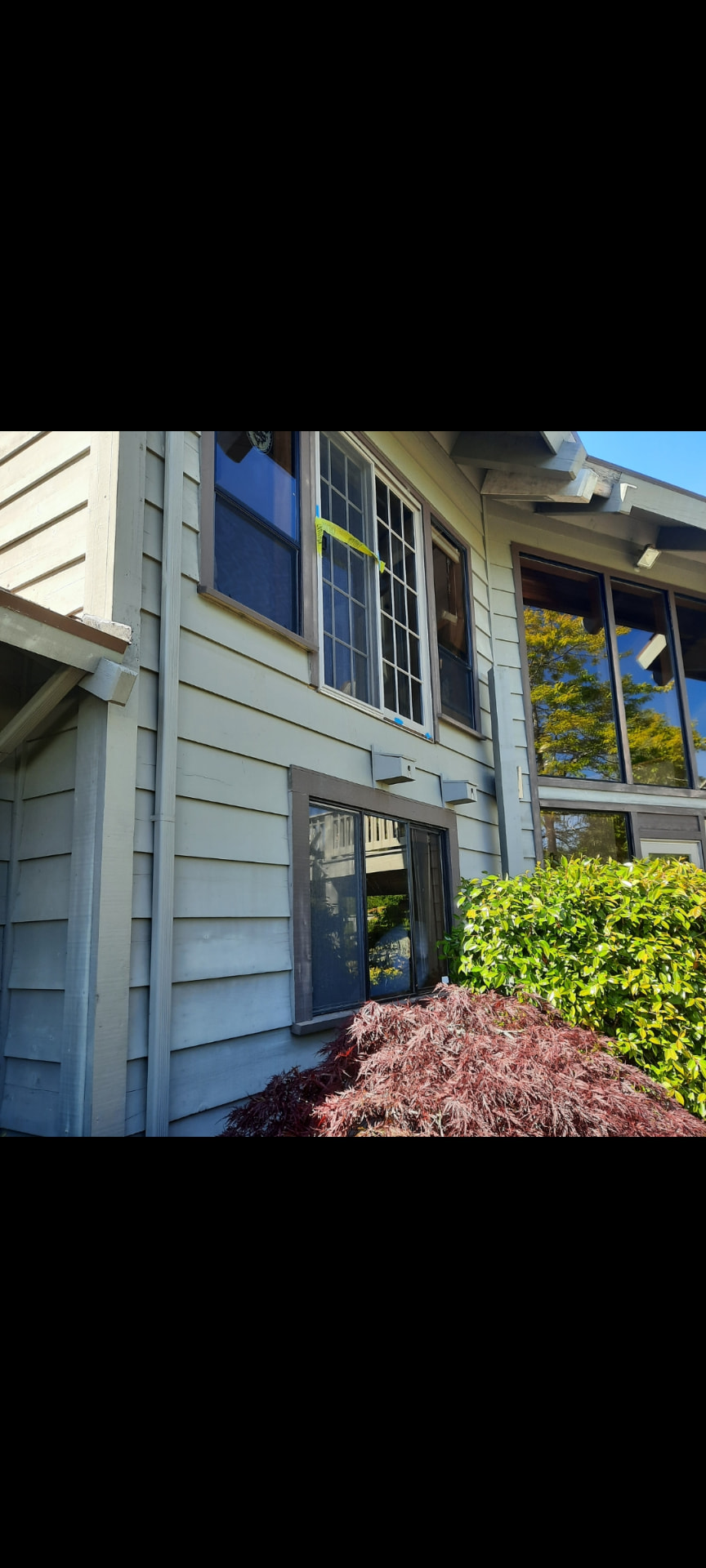
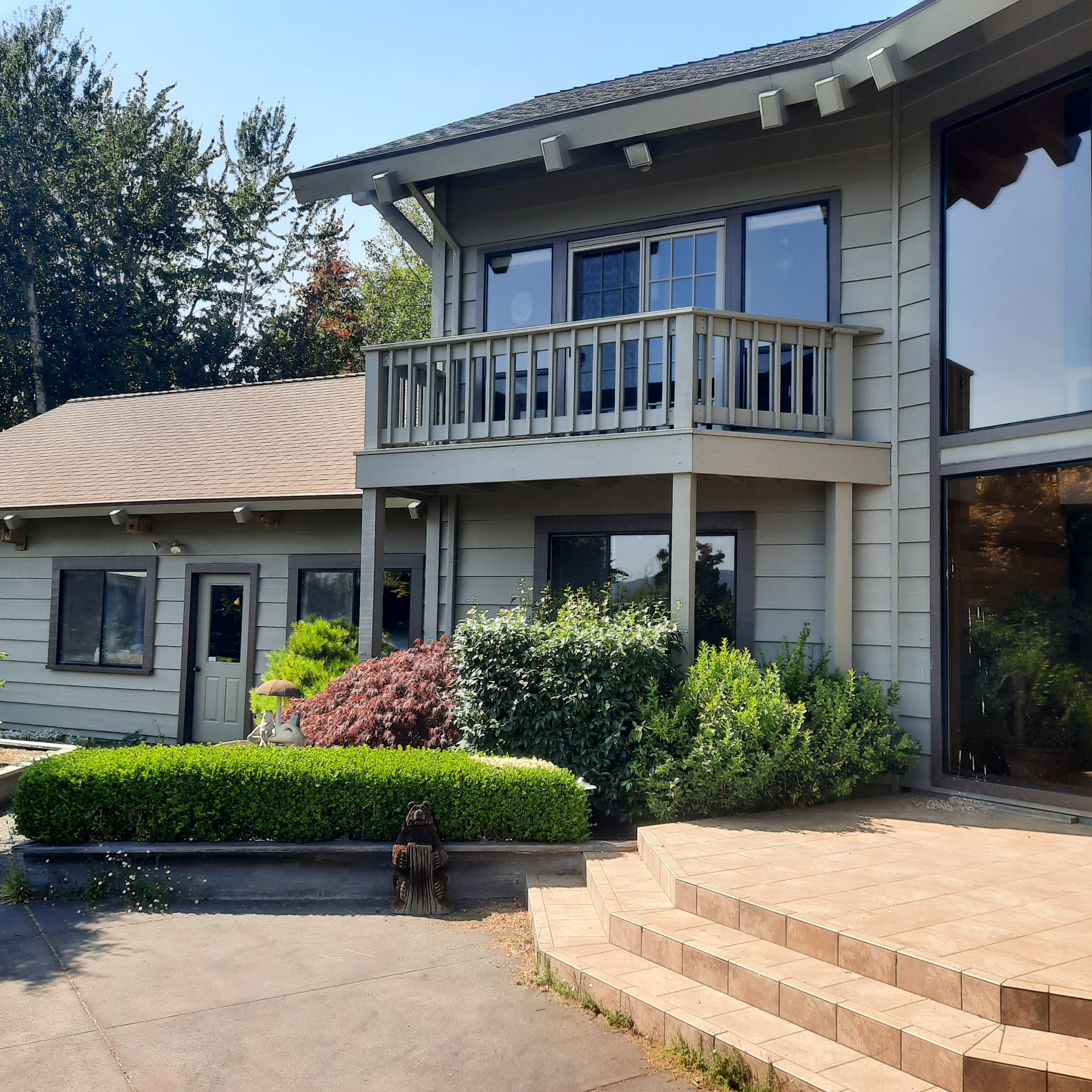
At the Wallace property, an aging balcony had reached the point where continued repair no longer made sense. The original lumber structure had served for roughly 40 years.
Rather than layering more repairs onto a structure at the end of its practical service life, Living Earth removed it and completed a full replacement.
The decision was not based on age alone. It was based on condition, repair value, and what would provide the better long-term result.
Localized Failure Does Not Always Require a New Deck
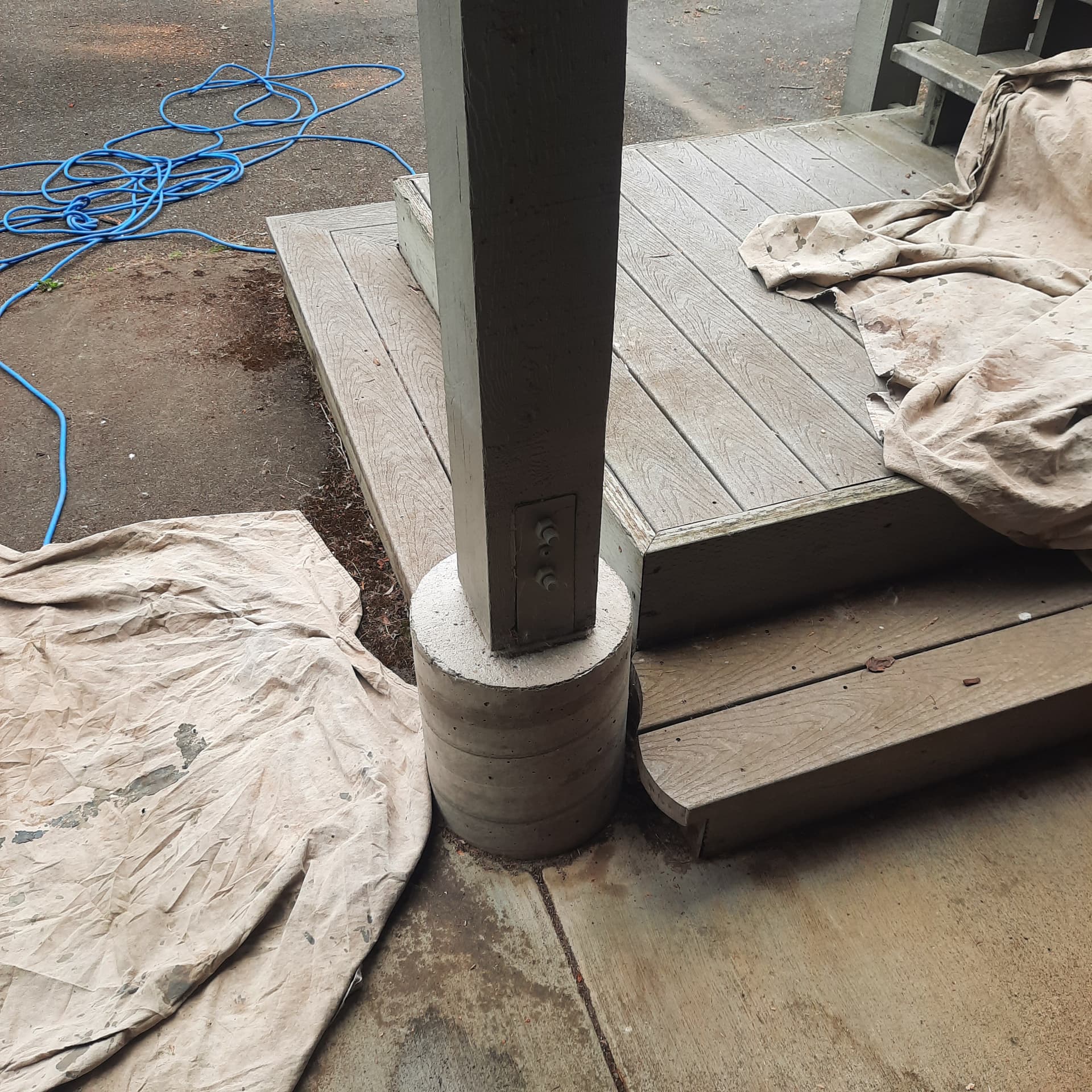
On another portion of the same property, deterioration was concentrated at the bottom of a structural deck support. The surrounding structure still had useful life.
Living Earth removed the failed material and corrected the support condition rather than replacing the entire cedar post.
This is the other side of the same decision: repair where repair still has value.
Sometimes the Structure Works but the Deck No Longer Fits the Property
A deck renovation may involve more than correcting deterioration. It can also improve:
- access
- stair location
- railing
- lighting
- privacy
- circulation
- maintenance
- materials
- relationship to patios or landscape
- and how the space is actually used
A structurally sound deck may still deserve renovation if the layout or details no longer serve the property well.
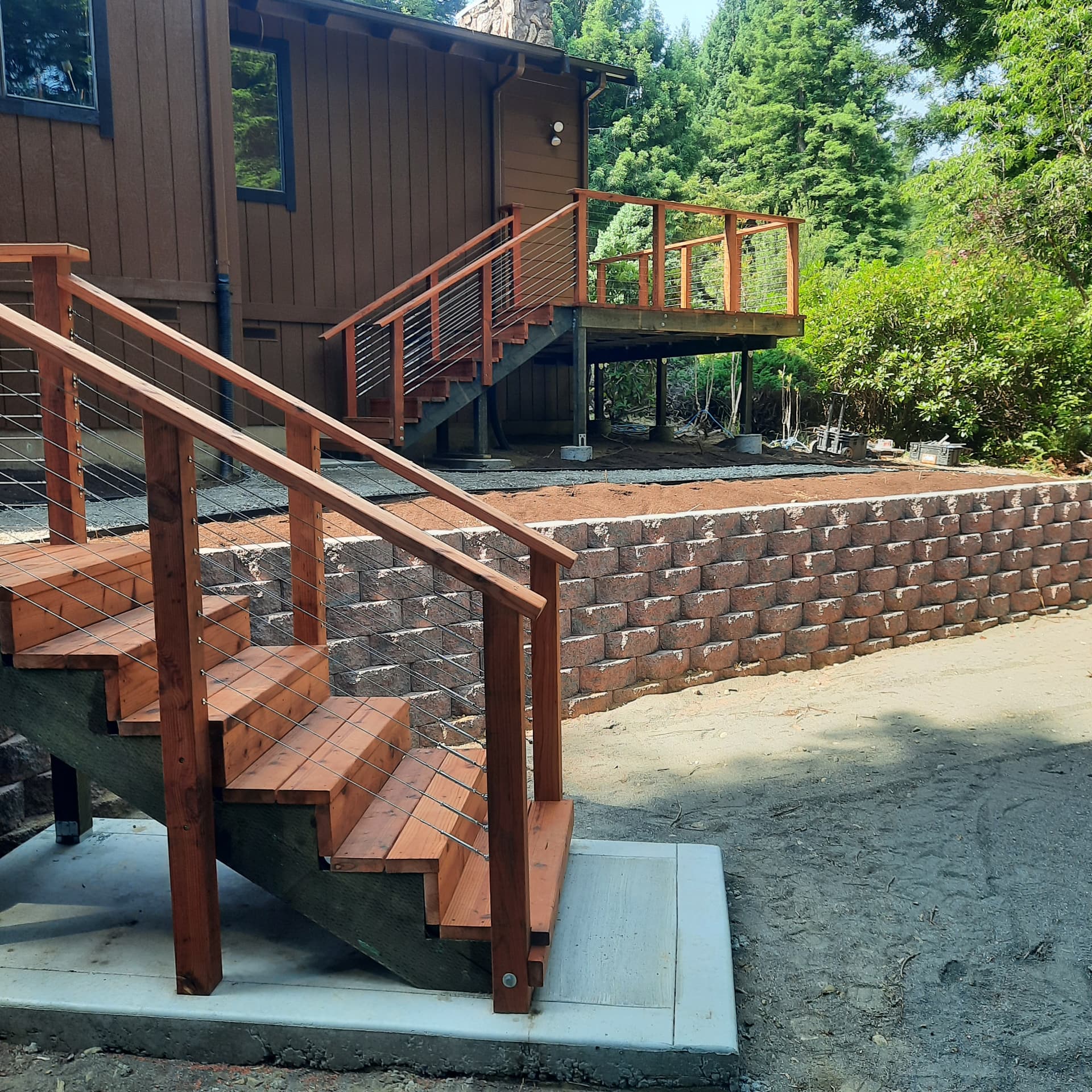
Material Choice Changes Maintenance and Service Life
Deck materials may include natural wood, treated lumber, composite decking, metal railing, cable railing, and combinations of several materials.
Each choice affects appearance, cost, maintenance, fastening, moisture behavior, repairability, heat, expansion, and long-term service. The practical question is which combination fits the site, the budget, and the maintenance you actually want.
The Decking Is Only as Good as the Structure Supporting It
When new decking is expected to last for many years, protecting the supporting wood becomes especially important. Depending on the project, that may include:
- flashing
- butyl tape
- drainage gaps
- improved detailing
- better separation from moisture
- and correcting conditions that previously trapped water
On the featured custom deck project, butyl tape was used on the supporting wood to help protect the framing and give the composite decking a better chance of reaching its intended service life.
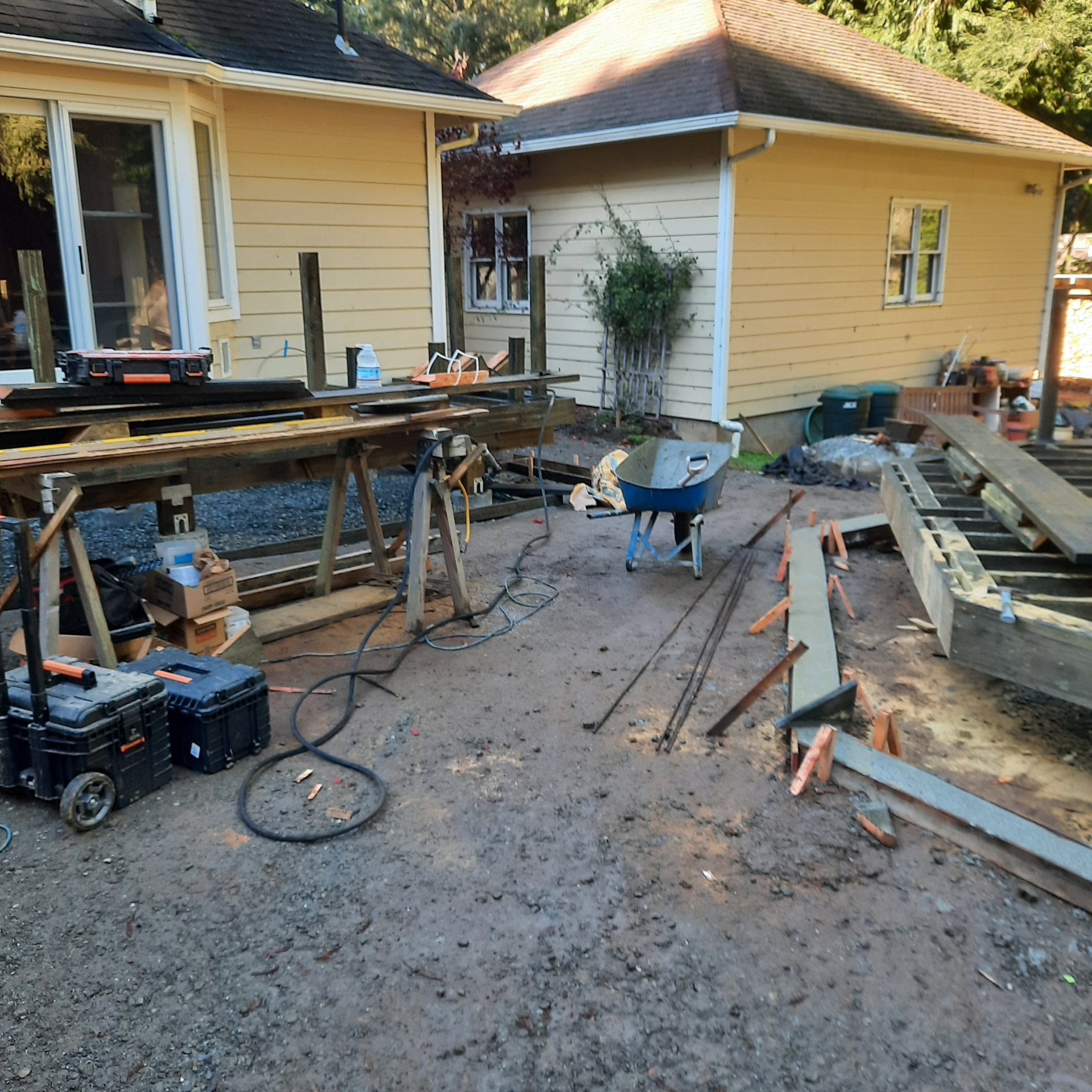
Stairs Deserve Their Own Evaluation
Deck stairs often experience:
- concentrated wear
- movement
- moisture exposure
- changing grade
- handrail issues
- and structural stress separate from the main deck
A stair repair should consider both the stair itself and what it connects to. Sometimes replacing stairs while preserving the larger deck is entirely reasonable.
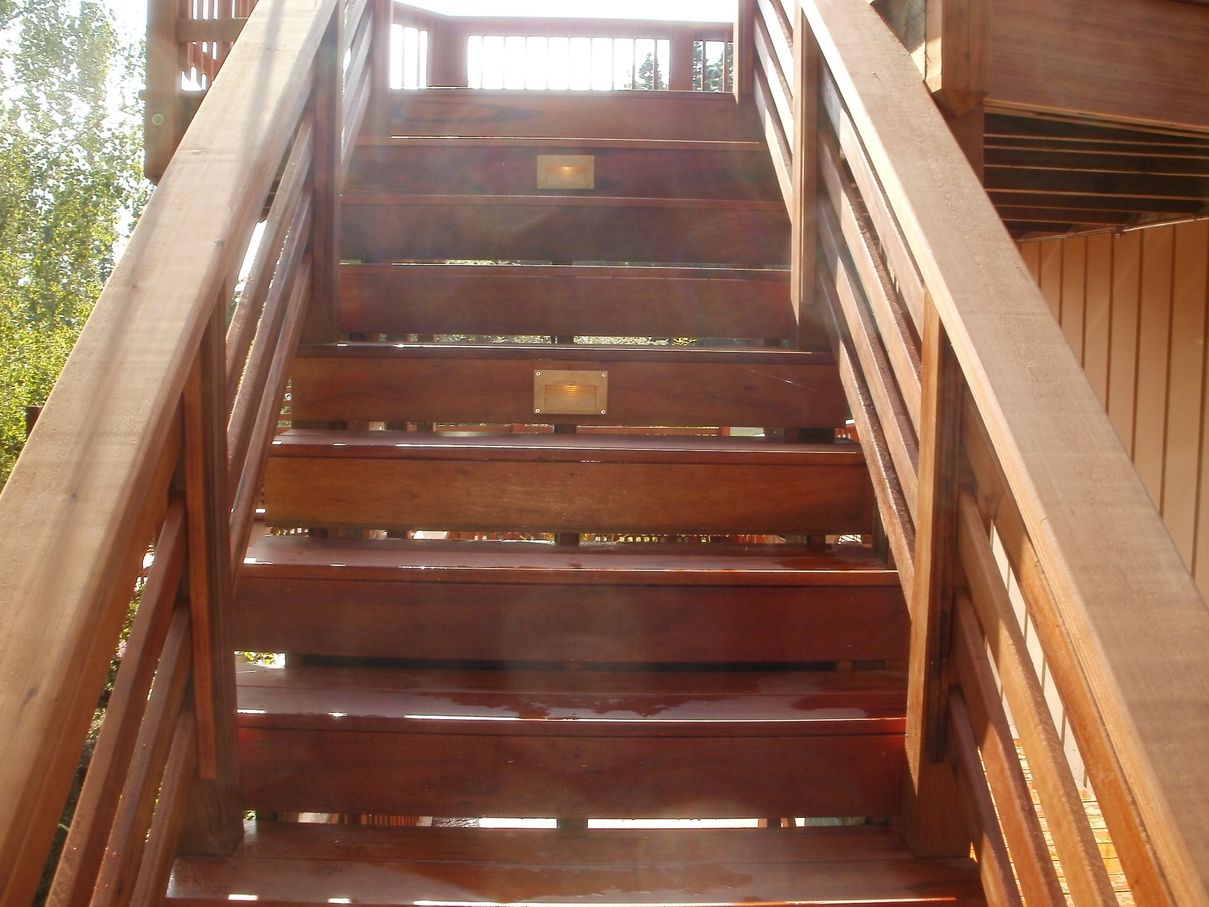
Railings Are More Than a Finish Detail
Railings affect safety, appearance, views, maintenance, and how open or enclosed the space feels.
An older deck renovation may be an opportunity to replace bulky or deteriorated railing with a more durable or visually open system—aluminum railing, steel cable, custom wood, or a combination appropriate to the site.
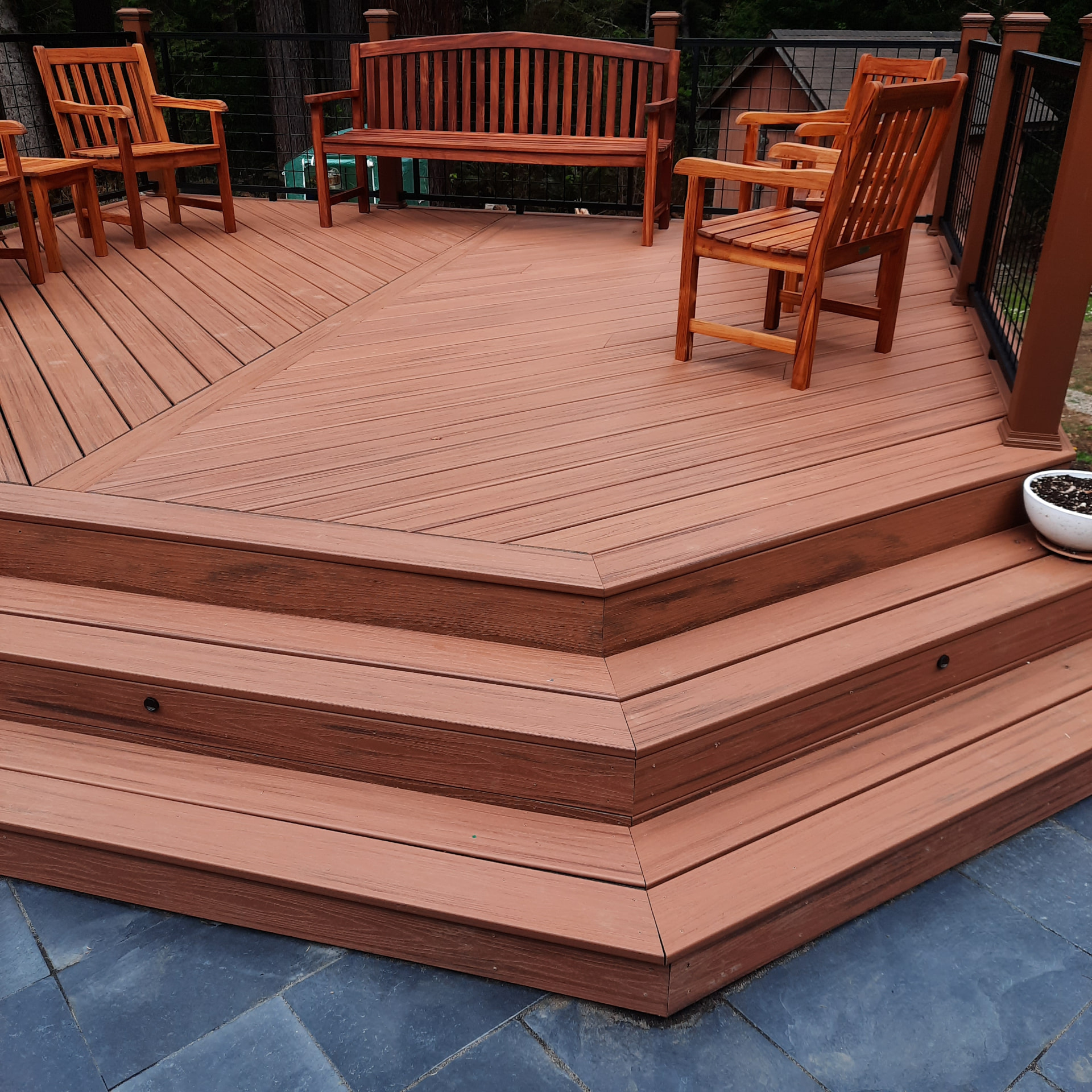
Lighting Can Improve Both Use and Safety
Integrated low-voltage lighting can improve stair visibility, edge awareness, nighttime access, and the overall usefulness of the space. Lighting is most effective when planned with the deck rather than added after the fact.
Rot Should Be Followed to Sound Material
Cosmetic patching over decayed wood does not correct structural deterioration. When rot is discovered, the useful approach is generally to:
- expose the affected area
- determine how far deterioration extends
- remove failed material
- identify why moisture accumulated
- and rebuild back to sound material
Exterior Wood Problems Usually Have a Moisture Story
Deck deterioration is often influenced by:
- trapped debris
- poor flashing
- standing water
- soil contact
- splashback
- roof runoff
- planter irrigation
- or details that prevent wood from drying
Correcting the wood without addressing the moisture source can shorten the life of the repair.
A Deck Does Not Exist by Itself
Deck decisions may affect patios, paths, grade, doors, drainage, planting, fencing, utilities, and future access.
On larger renovations, it can make sense to plan deck, hardscape, and circulation together rather than solving each one independently.
Good New Decks Start With Use, Not Square Footage
Before settling on size and shape, consider:
- how people will enter and leave
- furniture
- stairs
- sun and shade
- views
- grilling or cooking
- access to the yard
- relationship to patios
- maintenance
- railing
- lighting
- and future property plans
A larger deck is not automatically a better deck. A better deck fits how the property is actually used.
Clear Decisions Before Construction Reduce Changes During Construction
Time spent working through layout, material choices, stair location, railing, lighting, hardscape relationships, and finish details can reduce uncertainty after construction begins.
On the featured deck project, the clients had strong ideas about the finished space. Clear communication and time spent evaluating options allowed that project to reach completion without a single change order. Every project is different, but the planning is what made it possible.
Structural Conditions May Require Additional Review
Living Earth can evaluate visible deck conditions and perform carpentry work within appropriate scope. Some structural conditions, unusual spans, major building modifications, permitting issues, or other circumstances may require engineering, architectural input, permitting, or another appropriate professional.
Repair What Is Worth Saving. Replace What Is Not.
If you already know the work your deck needs, start with a project request.
If you are unsure whether repair, renovation, or replacement makes the most sense, a site consultation can help define the condition and compare options.
For questions not answered here, start with Consulting & Site Assessment.
The right decision starts with knowing what you actually have.