
Irrigation Planning, Repair & Renovation
A Running Irrigation System Is Not Necessarily a Good Irrigation System
Irrigation systems age along with the landscapes they serve.
Plants grow. Zones change. Heads get buried. Pressure changes. Valves fail. Repairs accumulate. Old lines become difficult to identify. A system that once worked well may no longer match the property.
Living Earth works with both new and existing irrigation systems, with an emphasis on practical coverage, reliable operation, repairability, and matching the system to the landscape that exists today.
Formal audit service
Irrigation Audits & MWELO Documentation
Keith Hamm is a Qualified Water Efficient Landscaper (QWEL), certified through an EPA WaterSense-labeled program. Living Earth offers scoped irrigation audits for completion documentation and evaluations of existing landscapes across Humboldt and Del Norte Counties, including Crescent City. Formal audit requirements are confirmed with the city or county reviewing the project.
The Question Is Not Just Whether Water Comes Out
A useful irrigation evaluation looks at:
- where water is actually reaching
- where it is not reaching
- pressure
- head spacing
- nozzle type
- plant water needs
- slope
- soil
- sun and shade
- zoning
- controller programming
- leaks
- valve performance
- and how the landscape has changed
Uneven coverage is usually better solved by understanding the system than by simply increasing watering time.
Dry Spots and Wet Spots Usually Have a Reason
Uneven irrigation may be caused by:
- poor head spacing
- mismatched nozzles
- low pressure
- excessive pressure
- blocked or buried heads
- plant growth
- changed grade
- broken components
- incorrect zoning
- or an older layout that no longer matches the landscape
Increasing run time may make one area wetter without fixing the dry area.
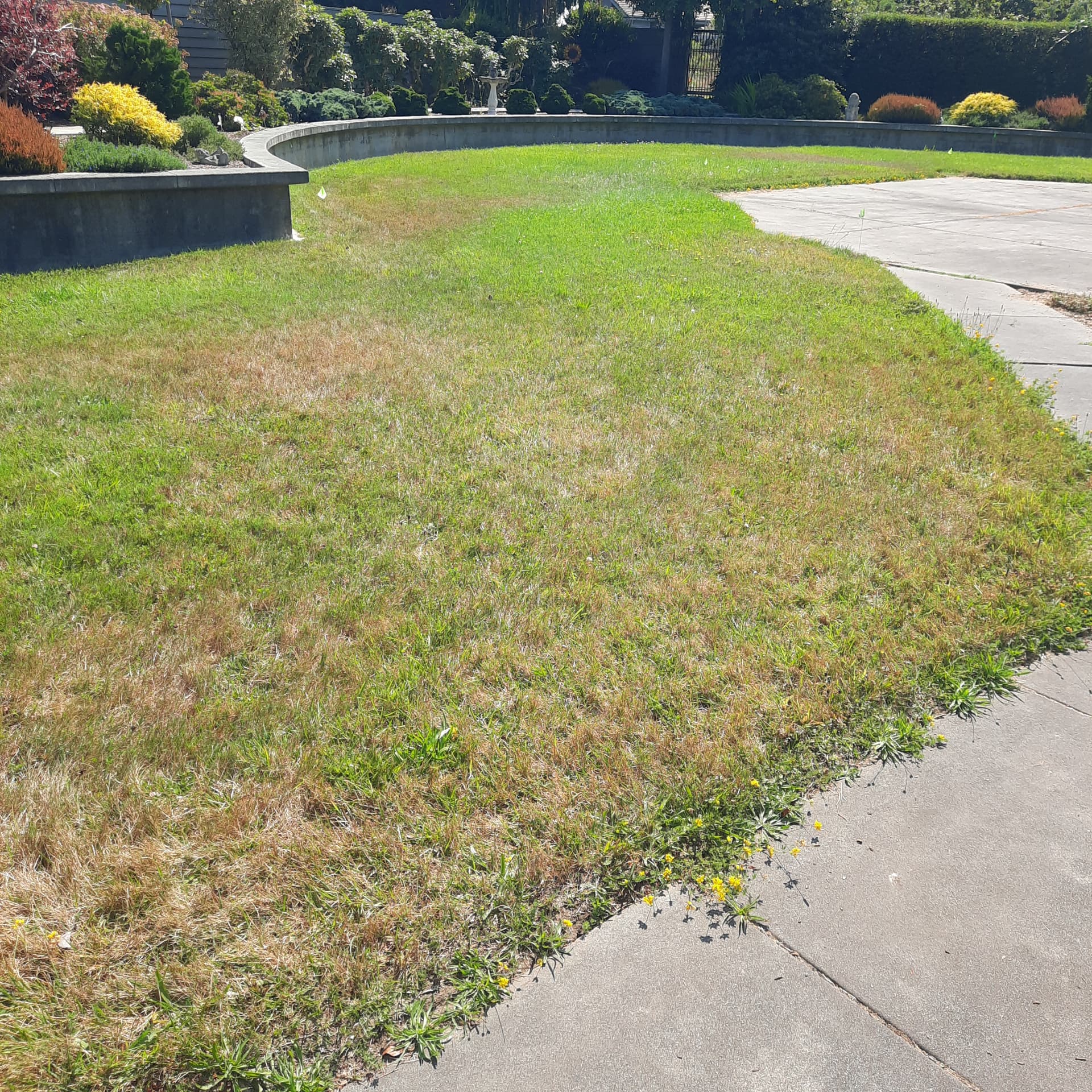
Same Placement. Same Program. Two Weeks Later.
Before
Two Weeks After Repair
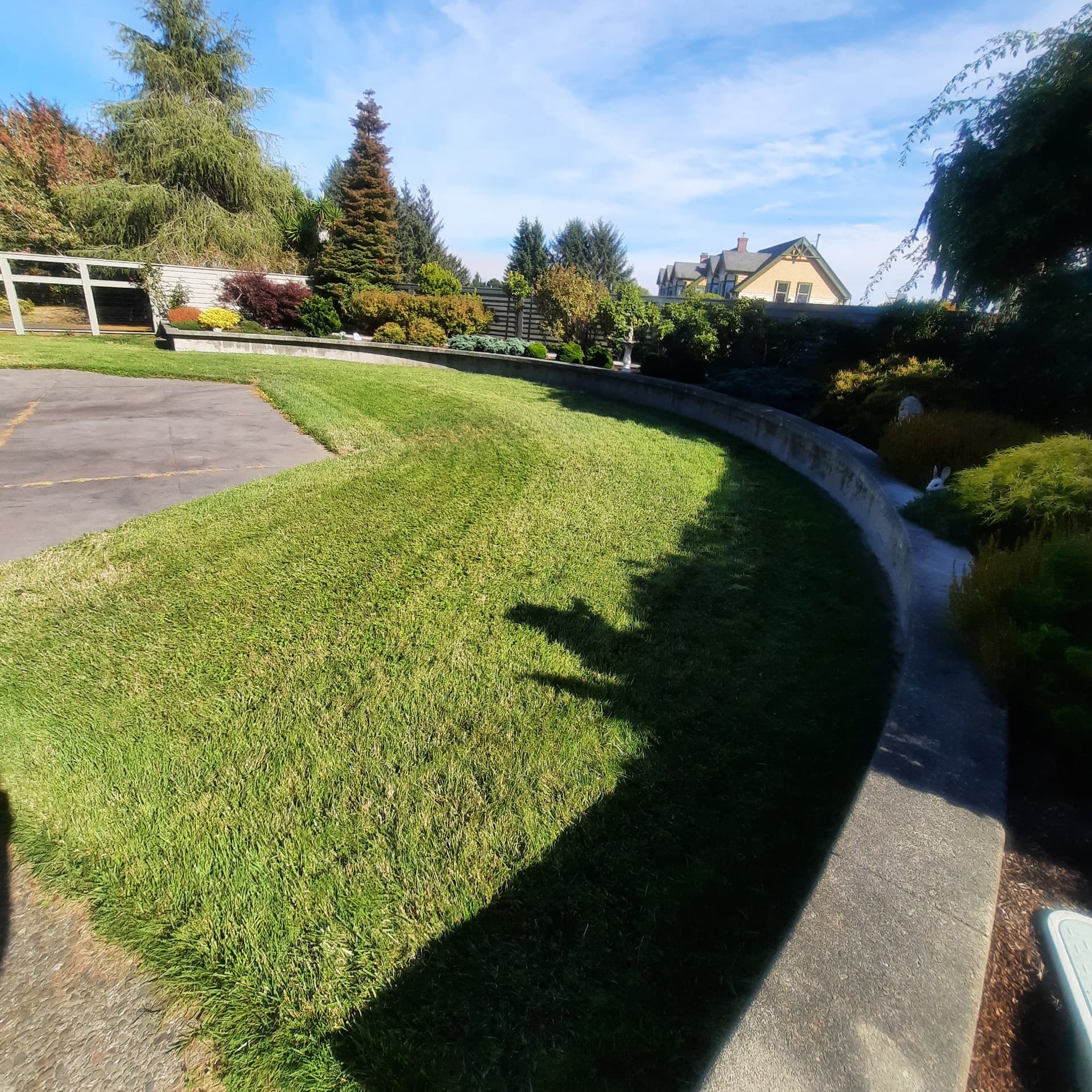
The sprinkler locations and watering program remained unchanged. Two weeks after correcting head height and alignment, the lawn showed substantially more even coverage without increasing run time.
Too Little Pressure and Too Much Pressure Can Both Cause Problems
Low pressure may produce
- poor radius
- weak coverage
- incomplete head operation
- and uneven distribution
Excessive pressure may contribute to
- misting
- overspray
- inefficient application
- component wear
- and poor nozzle performance
Useful troubleshooting looks at the system as a whole rather than assuming the controller is the problem.
A Zone Should Water Similar Needs Together
Irrigation works best when a zone serves areas with reasonably similar:
- plant type
- sun exposure
- soil
- slope
- application method
- and water requirement
Problems arise when one zone is expected to serve lawn and shrubs, sunny and shaded areas, steep and flat areas, or plants with very different water needs.
Renovation may involve reorganizing zones rather than simply replacing broken heads.
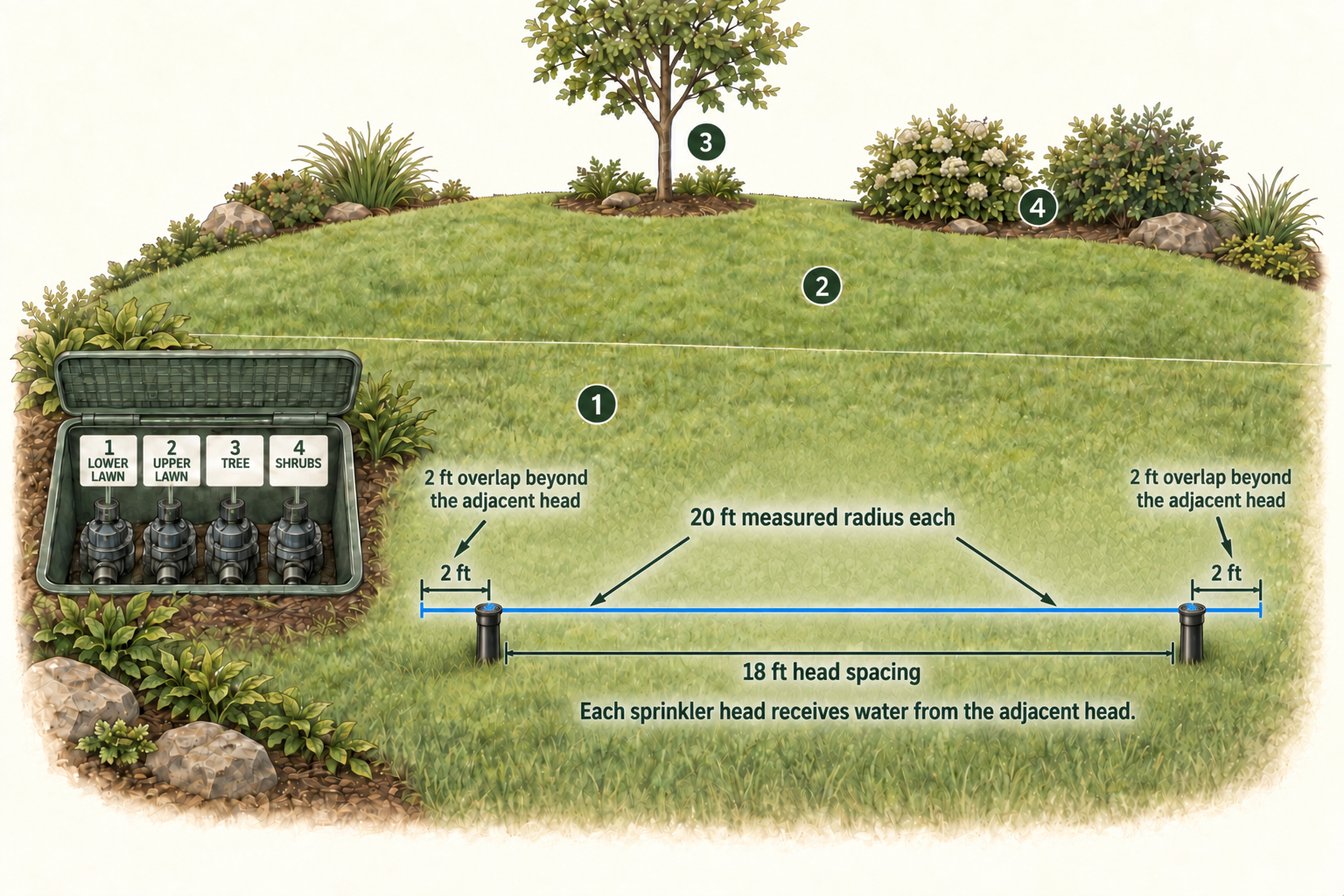
Lawn Coverage Depends on Overlap
Healthy lawn irrigation usually depends on overlapping coverage. Useful evaluation includes:
- spacing
- radius
- pressure
- nozzle consistency
- head height
- and whether the original layout still fits the lawn shape
Drip Works Well When It Is Designed for the Planting
Drip irrigation can be effective for shrub beds, trees, new planting, containers, narrow areas, and landscapes where targeted watering makes sense.
But drip is not automatically maintenance-free. Systems may require attention to:
- filtration
- pressure regulation
- emitter placement
- clogged emitters
- damaged tubing
- plant growth
- changing root zones
- and buried or hidden components
The irrigation method should fit the landscape—not the other way around.
A Landscape Renovation Is Often the Right Time to Renovate the Irrigation
Installing new planting over an unreliable irrigation system can create unnecessary problems. Before replanting, it can be useful to evaluate:
- valve condition
- line routing
- pressure
- controller
- existing zones
- head locations
- drip condition
- and whether the system still matches the proposed landscape
On the Norton and Terra Vista properties, irrigation was treated as part of the landscape renovation rather than as an afterthought bolted onto new planting.
A new landscape deserves an irrigation system that was considered at the same time—not discovered afterward.
Older Irrigation Systems Usually Have History Underground
Over many years, irrigation systems may accumulate:
- repairs
- abandoned lines
- different pipe materials
- added zones
- capped connections
- unknown routing
- improvised fittings
- and components from several generations of work
That does not automatically mean the system needs complete replacement. It does mean repair may require field diagnosis rather than simply following an original plan that no longer reflects reality.
Repair may require field diagnosis rather than simply following an original plan that no longer reflects reality.
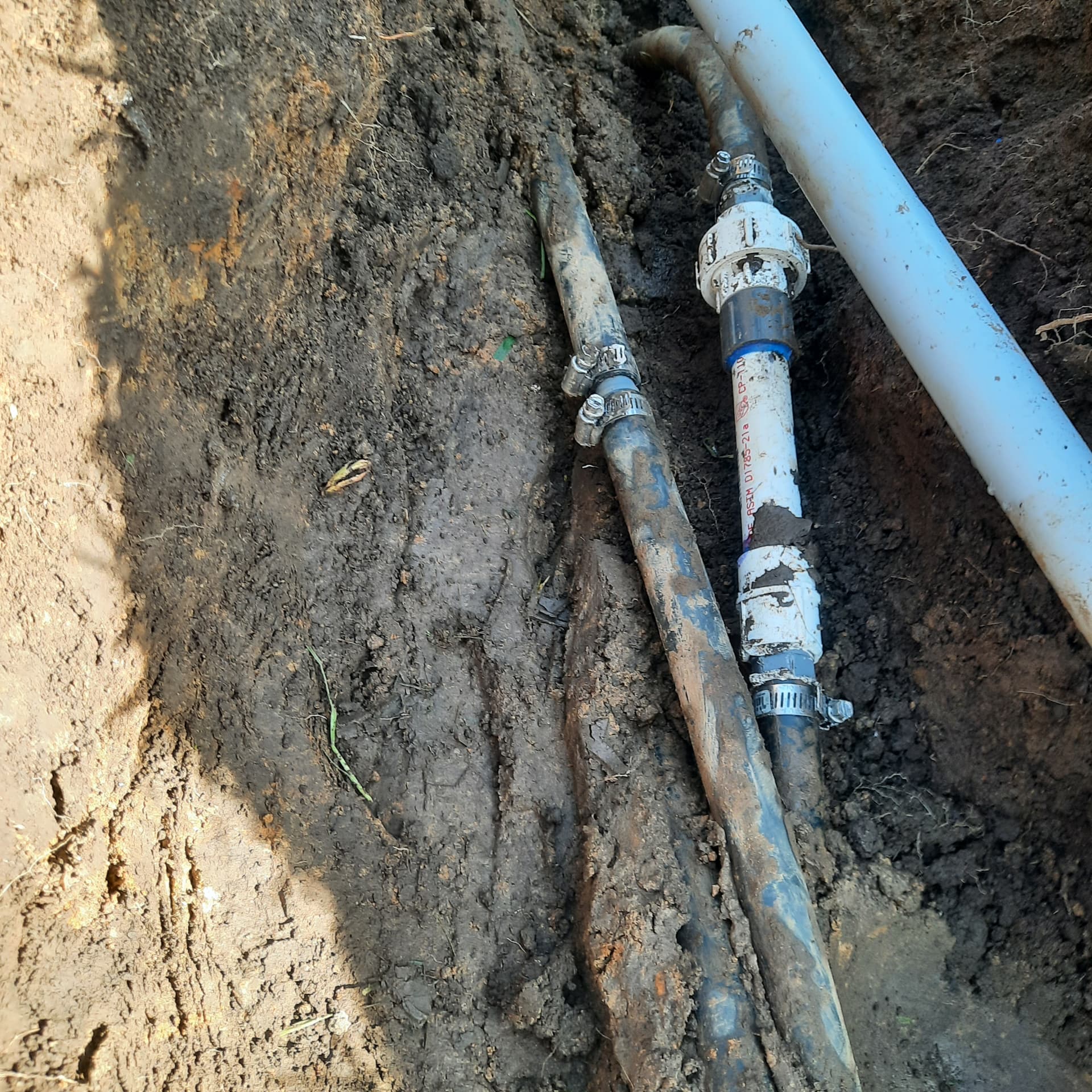
Sometimes the Hard Part Is Figuring Out What Was Buried There
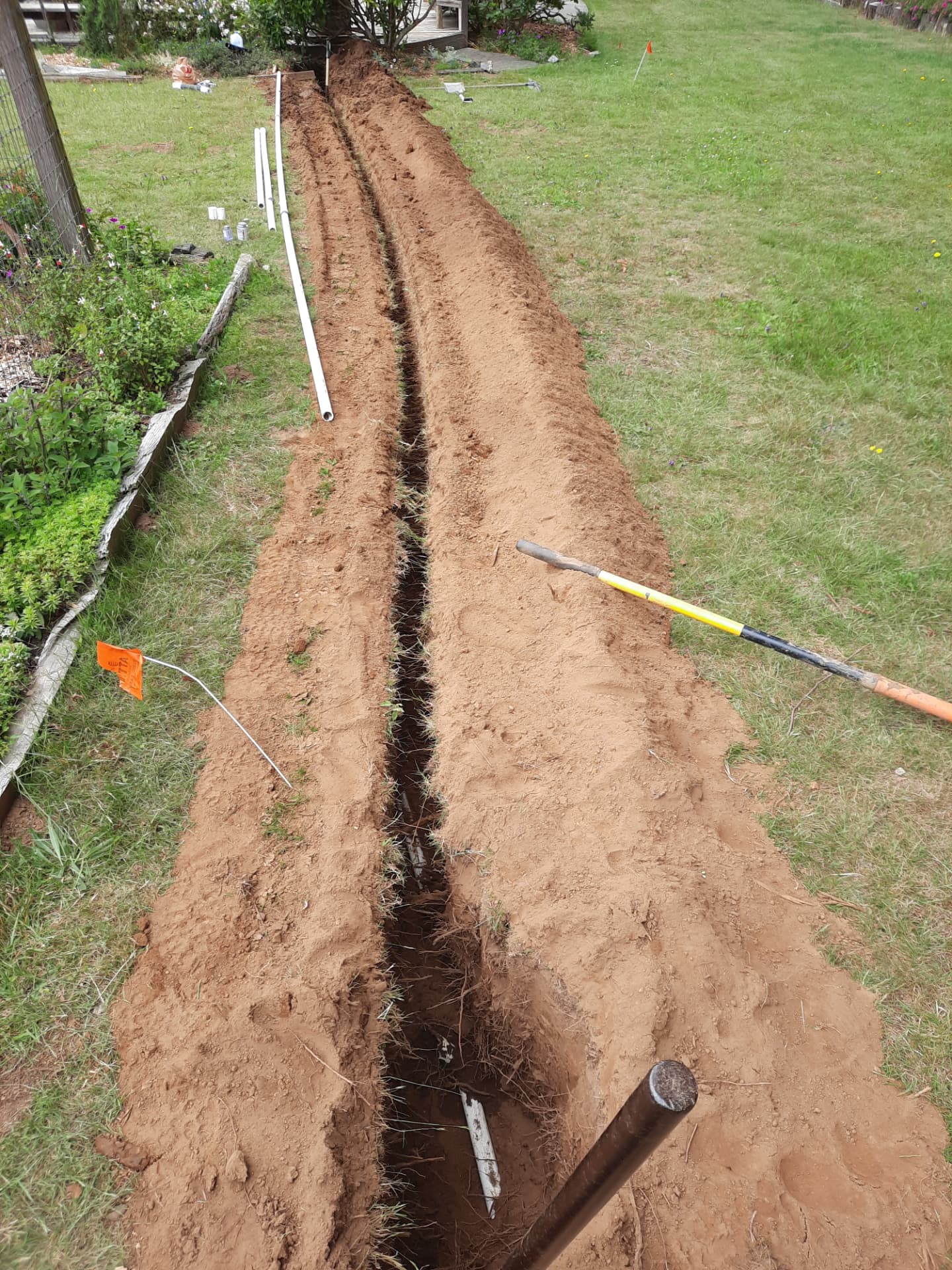
Older water lines may be unmarked, partially abandoned, repaired with unfamiliar materials, modified by several people over time, or difficult to identify until they are physically exposed.
The practical task is to determine:
- what the line serves
- whether it is still active
- how it connects
- whether the existing material can be repaired
- and whether replacement or bypass is the better answer
Good Repair Work Should Leave Better Information Behind
One of the easiest opportunities to improve a property’s future serviceability is while the trench is still open. Useful documentation may include:
- photographs
- relative locations
- routing
- valves
- connection points
- pipe changes
- and other information that may matter later
The goal is simple: do not make the next repair rediscover everything the current repair already learned.
Not Every Old System Needs to Be Rebuilt
Repair may make sense when
- the problem is localized
- the main system remains serviceable
- existing zones still match the landscape
- and the repair provides useful additional life
Renovation or replacement may make more sense when
- failures are widespread
- routing is unreliable
- zones no longer match the property
- buried repairs have accumulated
- pressure is fundamentally inadequate
- or the landscape is already being extensively renovated
The right answer depends on the actual system.
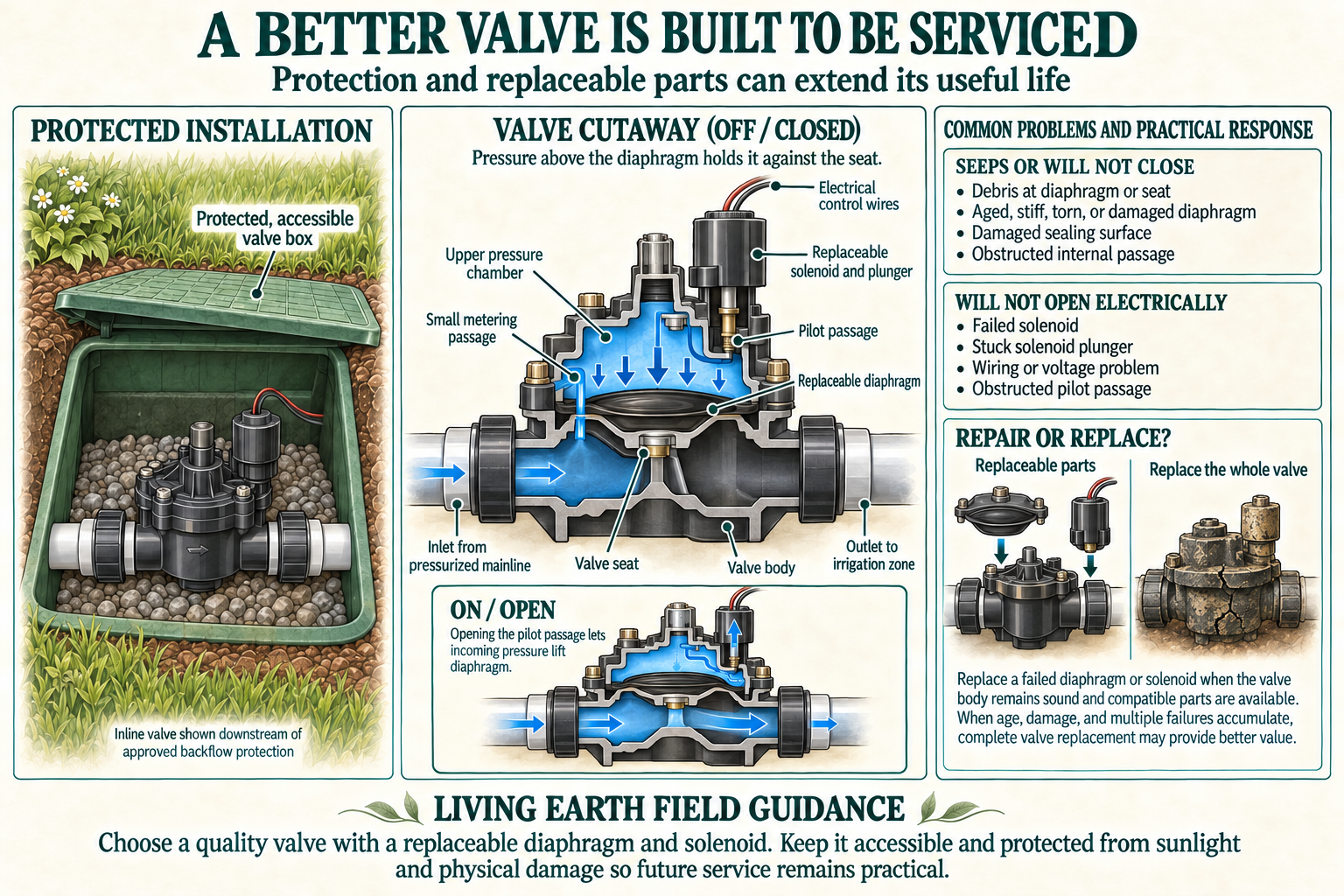
Valve Problems Can Look Like Coverage Problems
A zone that performs poorly may be affected by:
- failing valve components
- incomplete opening
- debris
- wiring issues
- pressure
- or upstream restrictions
Replacing heads without evaluating the source of the problem may not improve performance.
A Better Controller Cannot Correct a Bad Hydraulic Layout
Modern controllers can improve scheduling and convenience. They cannot fix:
- poor coverage
- broken lines
- incorrect zoning
- bad pressure
- failed valves
- buried heads
- or a system that no longer matches the landscape
Controller upgrades are most useful when the physical irrigation system is already functioning properly.
Efficient Irrigation Is Mostly About Applying the Right Water in the Right Place
Efficiency may be improved through:
- better zoning
- corrected pressure
- appropriate nozzles
- reliable drip
- proper scheduling
- fixing leaks
- reducing overspray
- matching irrigation to mature planting
- and eliminating watering where it is no longer needed
Slopes Change How Water Behaves
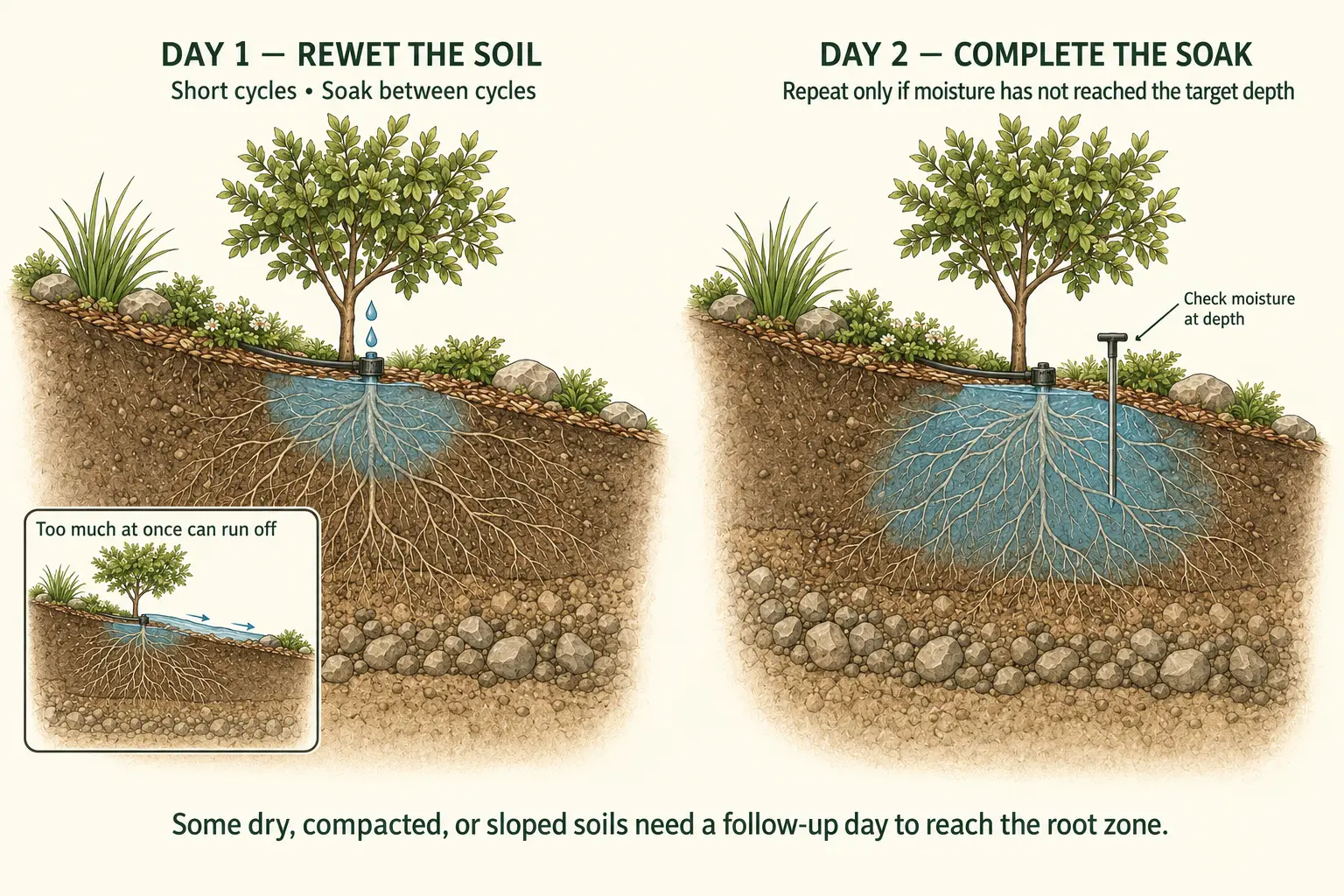
Water applied too quickly on a slope may run off before soaking into the soil. Useful strategies may include:
- application rate adjustment
- cycle-and-soak scheduling
- drip
- zoning
- soil improvement
- mulch
- and planting appropriate to the slope
Irrigation should also be considered alongside drainage.
New Trees Need Irrigation That Changes as They Establish
A newly planted tree has a relatively limited root zone. Over time, roots spread beyond the original planting hole. Irrigation should be able to evolve with that growth rather than permanently concentrating all water at the trunk.
Irrigation should be able to evolve with root growth rather than permanently concentrating all water at the trunk.
New Systems Should Be Built for Service as Well as Coverage
Useful planning includes:
- valve access
- logical zoning
- pipe routing
- controller location
- pressure
- future planting
- repair access
- sleeves beneath hardscape
- documentation
- and leaving the system understandable to the next person who works on it
A good irrigation system should not become a mystery simply because the trench was closed.
Plan for the Things That Will Be Hard to Cross Later
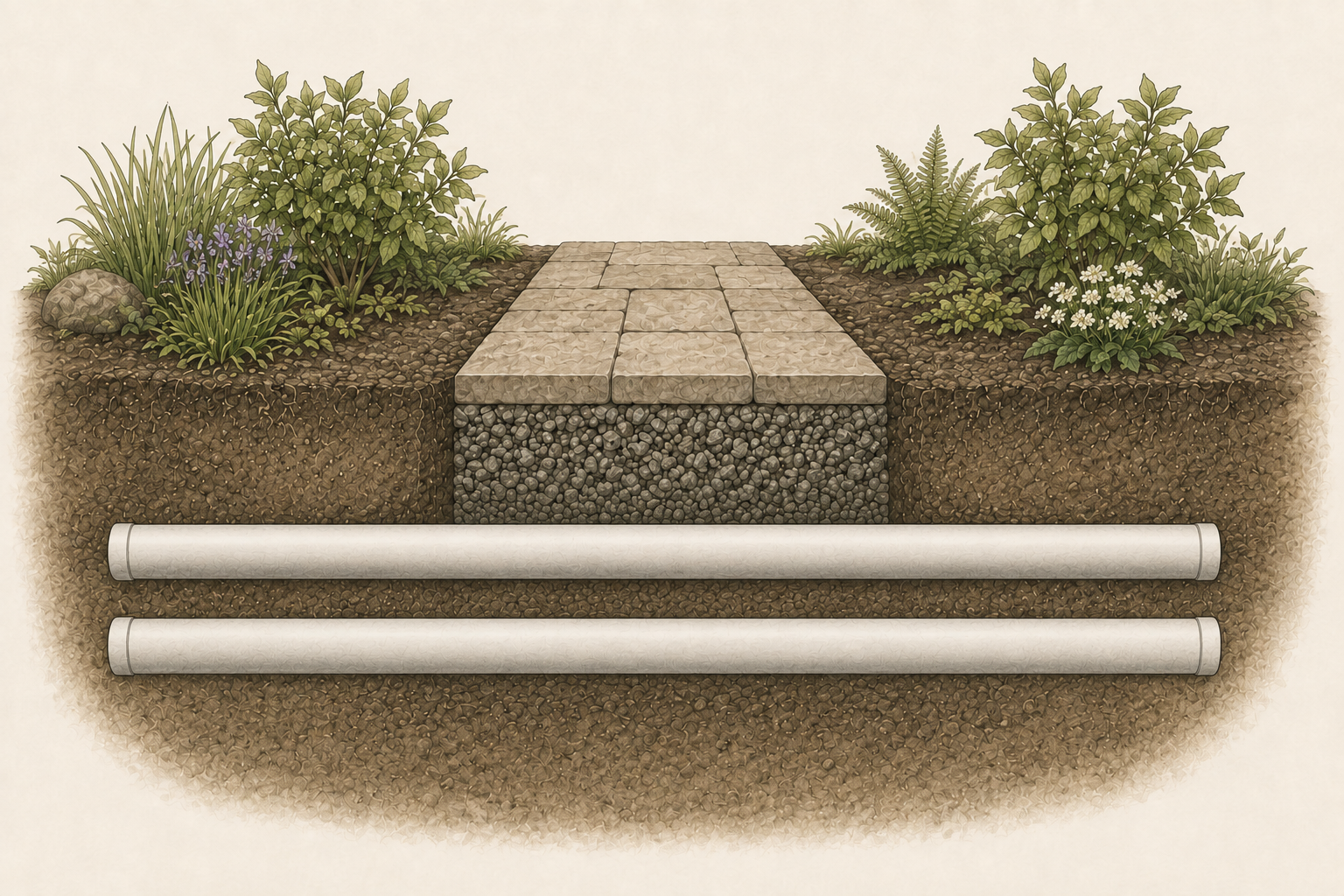
Where irrigation or other utility lines may need to pass beneath patios, walkways, driveways, walls, or other permanent work, installing sleeves or planning crossings before construction can make future service substantially easier.
This is one of the ways irrigation planning connects to phased property planning—decisions made early can prevent expensive obstacles later.
Know What Else May Be Underground
Irrigation work can overlap with:
- water service
- electrical
- drainage
- communications
- gas
- and other buried systems
Utility locating and appropriate caution should be part of excavation planning.
Irrigation Should Disappear Into the Finished Landscape
The best irrigation system is usually not the most visible part of the project. Its job is to quietly support:
- healthy plants
- appropriate water use
- reliable establishment
- and practical maintenance
A good landscape should not have to be distorted around poor irrigation.
Some Irrigation Work Overlaps Other Trades
Living Earth handles irrigation installation, repair, troubleshooting, and landscape integration within appropriate scope.
Electrical work itself should be performed by the appropriate qualified electrical professional when required. Unknown buried utilities, water-service issues, or other conditions may also require additional professional involvement.
Fix the System, Not Just the Symptom
If you already know the irrigation work you need, start with a project request.
If coverage, pressure, buried routing, zoning, or the relationship between irrigation and the landscape is unclear, a site consultation can help define the problem first.
For questions not answered here, start with Consulting & Site Assessment.
Reliable irrigation should make the landscape easier to manage—not harder to understand.