
Ponds & Water Quality
A Pond Is a Living System, Not Just a Hole With Water
Ponds change over time.
Fish grow. Sediment accumulates. Pumps wear out. Filtration becomes undersized. Plants mature. Lighting ages. Rock shifts. Maintenance gets deferred.
A pond that worked well years ago may still have a good structure but need renovation, better circulation, updated equipment, or a proper cleanout.
Many pond problems are not caused by one failed part, but by an imbalance between circulation, filtration, fish load, debris, and maintenance.
Living Earth works with both new and established ponds, with particular emphasis on understanding what still works, what needs attention, and what will give the system another useful life.
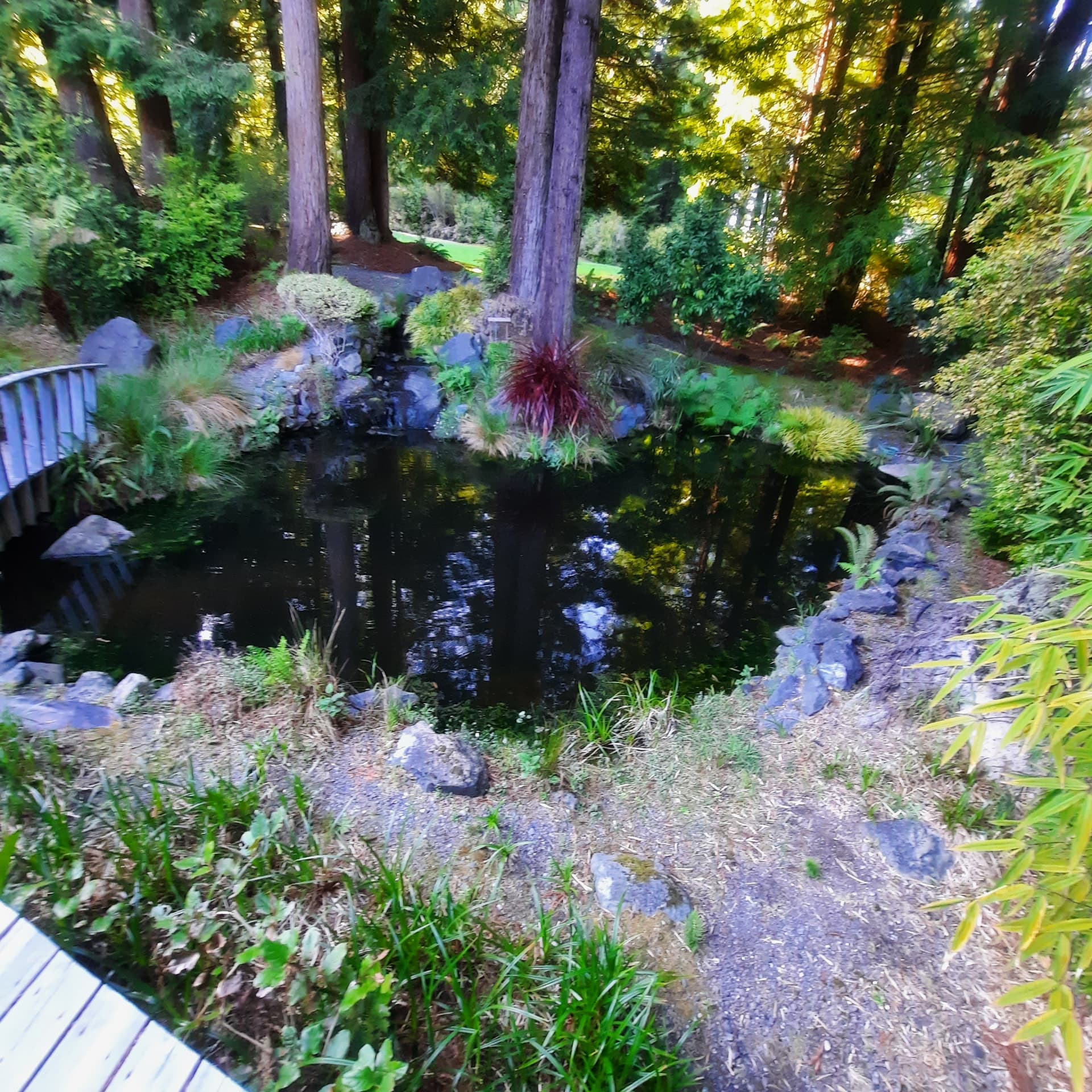
Understand the Pond Before Replacing It
Not every aging pond needs to be rebuilt. A useful evaluation looks at:
- pond depth
- fish load
- circulation
- pump capacity
- filtration
- sediment
- plant growth
- edge condition
- water loss
- electrical and lighting condition
- maintenance access
- and the owner’s expectations for appearance and upkeep
Good renovation starts by determining what should be replaced, what can still be repaired, and what will give the system another useful life.
Sediment Is More Than an Appearance Problem
Leaves, fish waste, soil, plant debris, and other organic material gradually settle to the bottom of a pond. Some accumulation is normal.
When sediment becomes too deep, lower layers can become anaerobic. That can reduce water quality, contribute to odor and algae problems, interfere with circulation, and make maintenance more difficult.
A full cleanout may be appropriate when accumulated material has reached the point where routine maintenance is no longer enough.
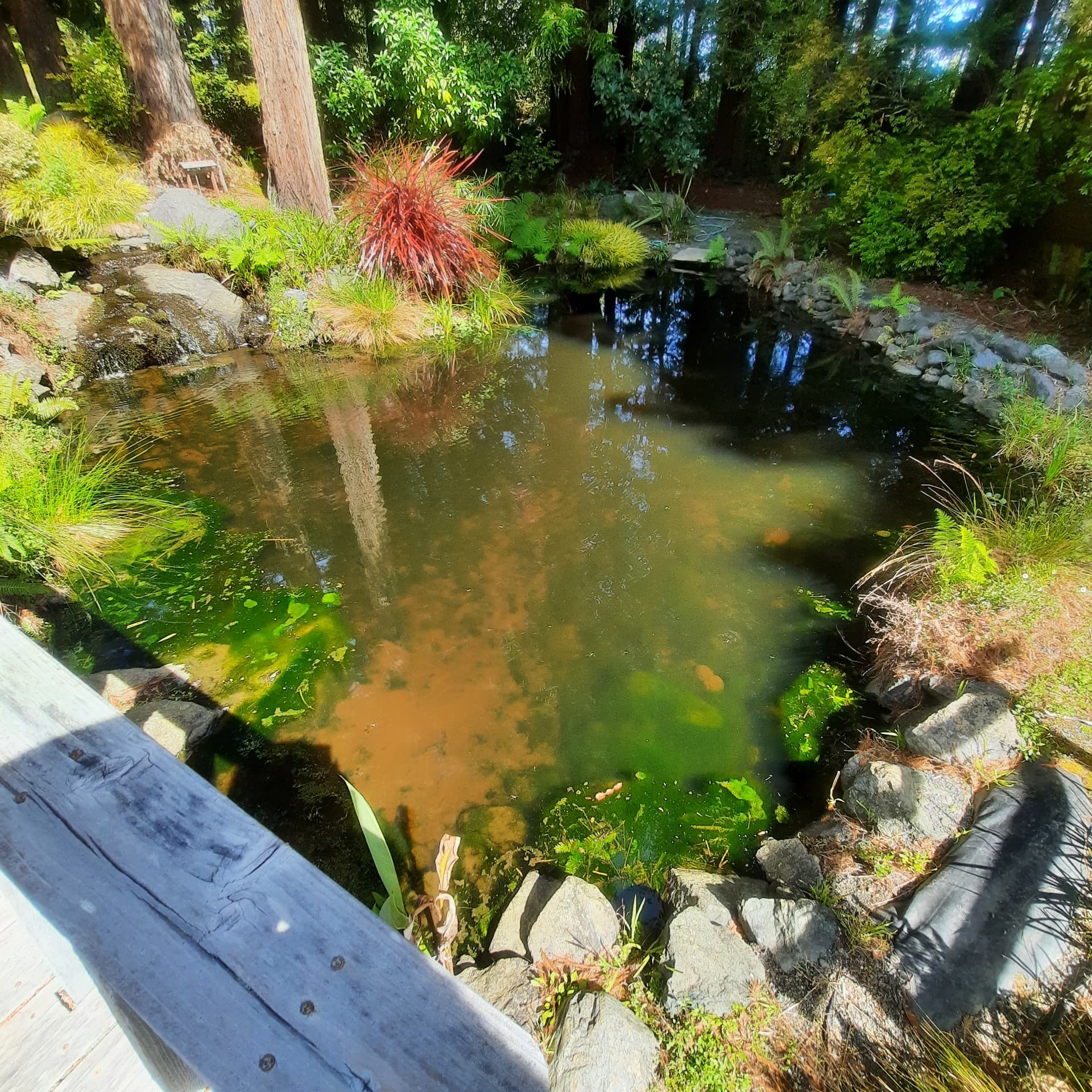
Routine Maintenance and Full Cleanouts Serve Different Purposes
Seasonal / Routine Service
May include:
- debris removal
- pump inspection
- filter cleaning
- plant management
- minor water-quality correction
- algae management
- checking circulation
- checking visible leaks or edge issues
- and general system evaluation
Full Cleanout
May include:
- temporary fish holding
- draining
- sediment removal
- basin inspection
- rock and edge cleanup
- plant division or removal
- pump and filtration service
- repair work
- and controlled restart
A pond should not be completely torn apart every year simply because it is a pond. Maintenance should match the actual condition of the system.
Fish Need a Plan Too
When a pond must be drained for a major cleanout or rebuild, fish should be managed as part of the project—not as an afterthought. Depending on the work, that may involve:
- temporary holding tanks
- aeration
- water-quality management
- shade and temperature considerations
- controlled transfer
- and returning fish only after the system is ready
Pumping More Water Is Not Always the Same as Improving the Pond
A pond may benefit from different flow rates for different purposes. Continuous filtration often rewards efficient, reliable circulation. A waterfall or creek may need higher flow only when the stronger visual effect is wanted.
In some systems, separate pumps can provide both:
- efficient everyday filtration and circulation
- and higher-flow display operation when desired
More pump flow is not automatically better if the rest of the system cannot use that flow effectively.
Filtration Works Best When Flow and Filter Capacity Are Balanced
Filtration is not simply a matter of moving more water. A useful pond system balances:
- flow rate
- filter size
- water distribution
- mechanical filtration
- biological filtration
- fish load
- debris load
- and maintenance access
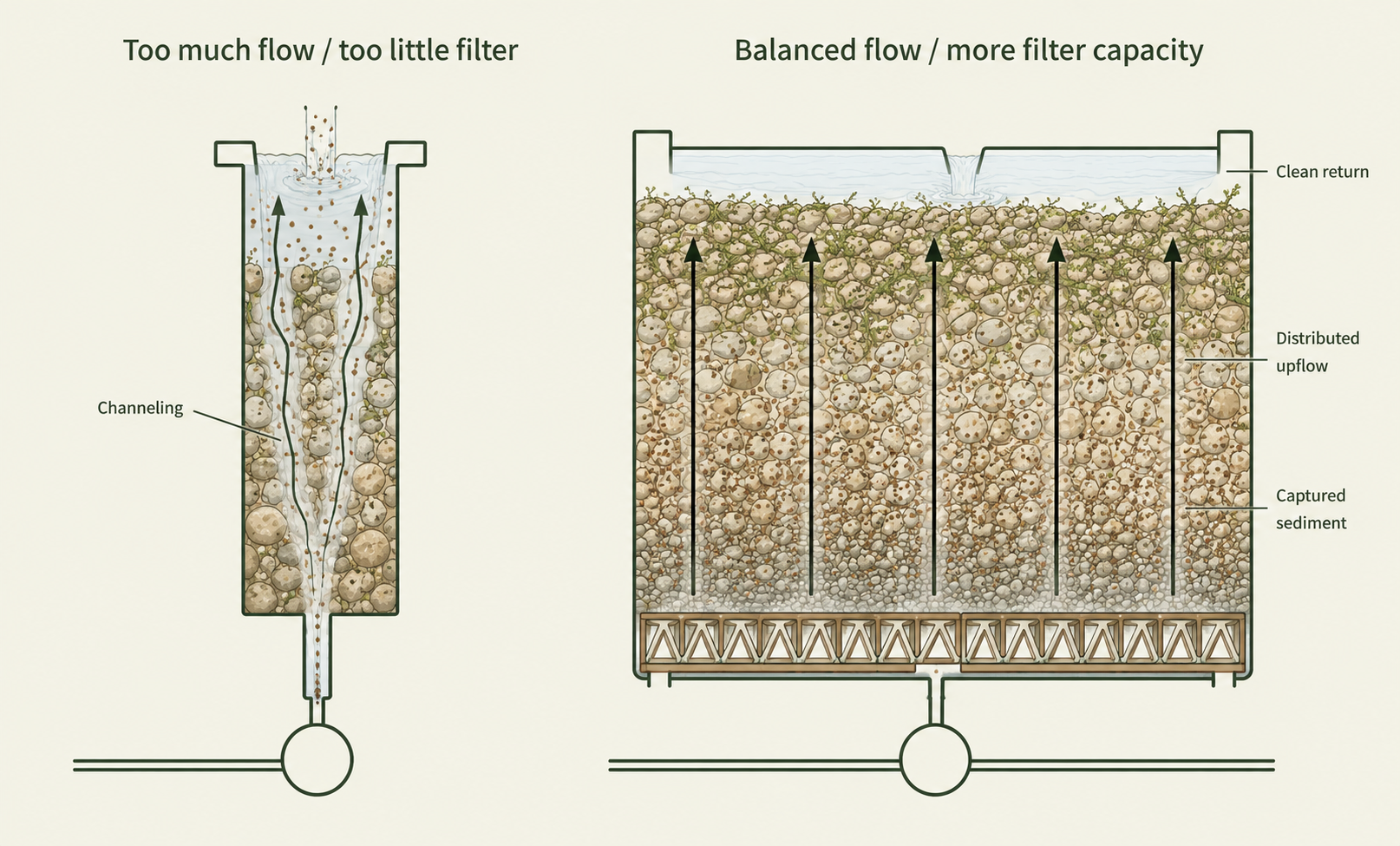
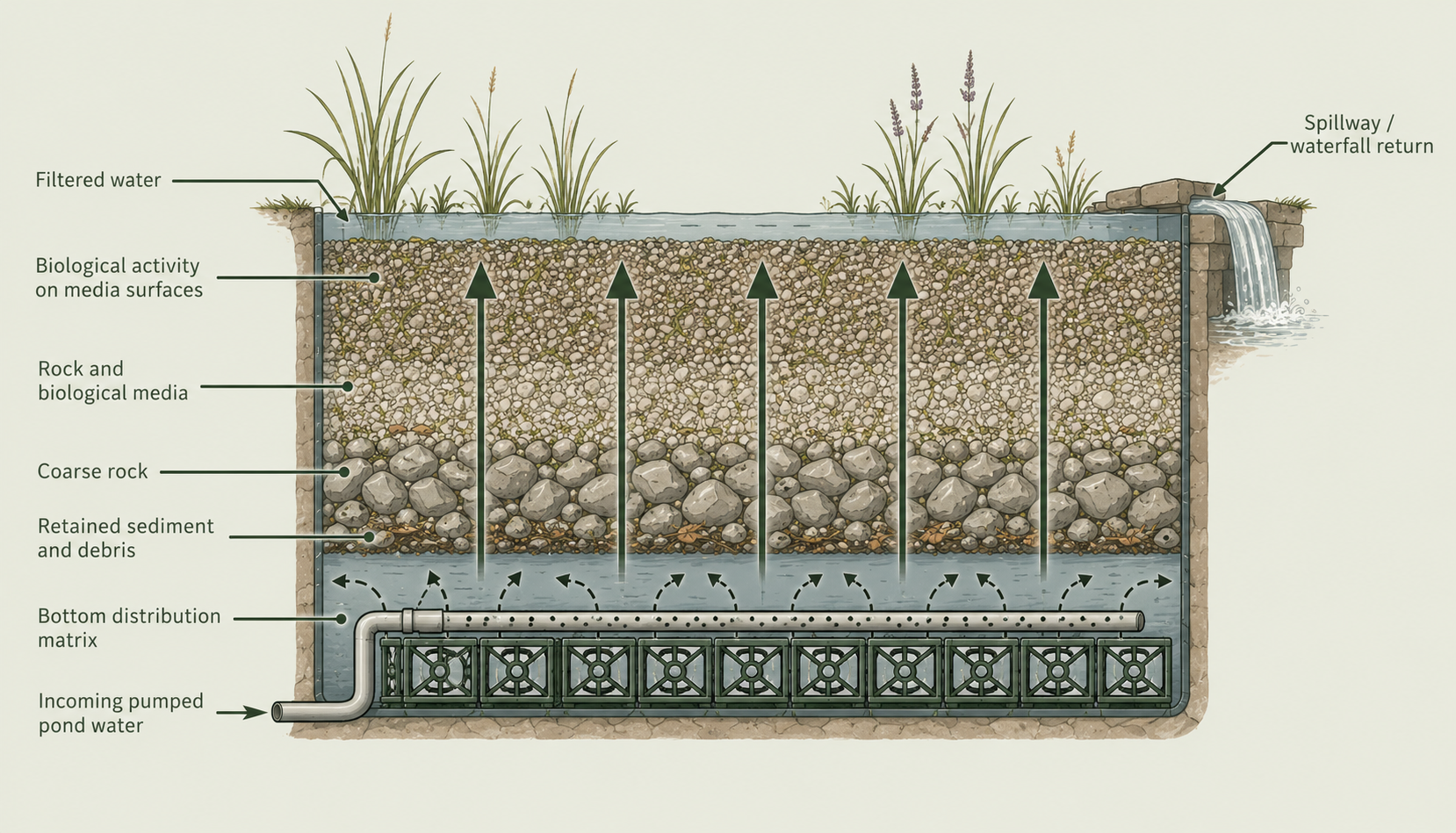
If water moves too quickly through a filter that is too small for the flow, suspended material has less opportunity to settle or be captured effectively. The biological portion of the system can also become less effective when the water is pushed through a limited filter volume too aggressively.
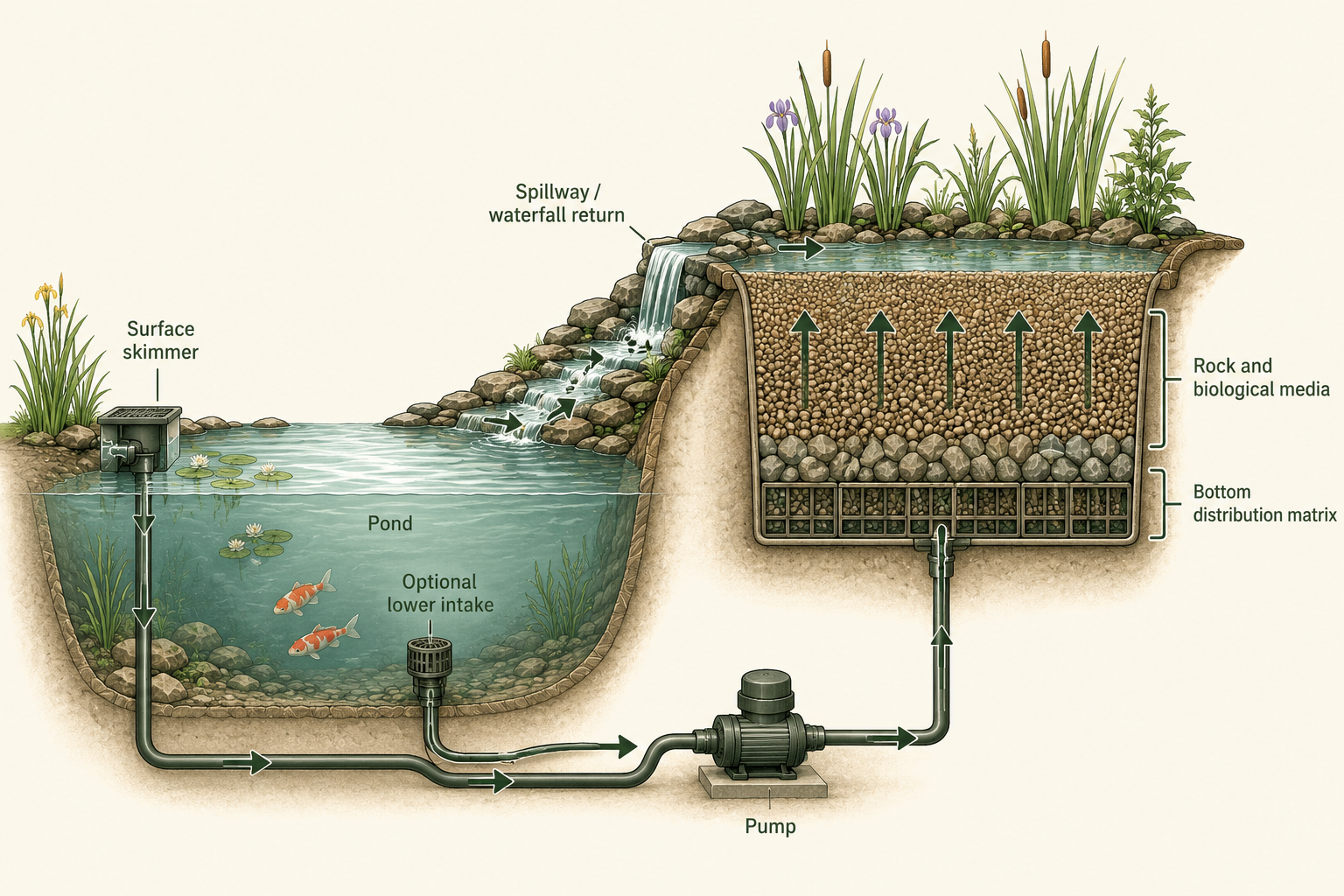
A larger, appropriately designed filter allows incoming water to slow and disperse through a greater area. That creates better conditions for both:
Mechanical Filtration
Mechanical filtration removes or separates suspended debris before it continues circulating through the pond. Slower, better-distributed flow can give heavier material an opportunity to settle or be captured rather than simply being carried back through the system.
Biological Filtration
Biological filtration provides surface area and conditions for beneficial bacteria involved in processing pond waste. Adequate filter volume, water distribution, oxygen, and appropriate flow all contribute to how effectively that biological system performs.
Useful filtration planning considers:
- pond volume
- fish population
- feeding load
- debris load
- pump flow
- filter capacity
- maintenance frequency
- access
- and owner expectations
A system that was adequate when the pond was new may become undersized as fish grow and conditions change.
More flow is not automatically better. The goal is effective circulation and effective filtration working together.
How the Pieces Relate
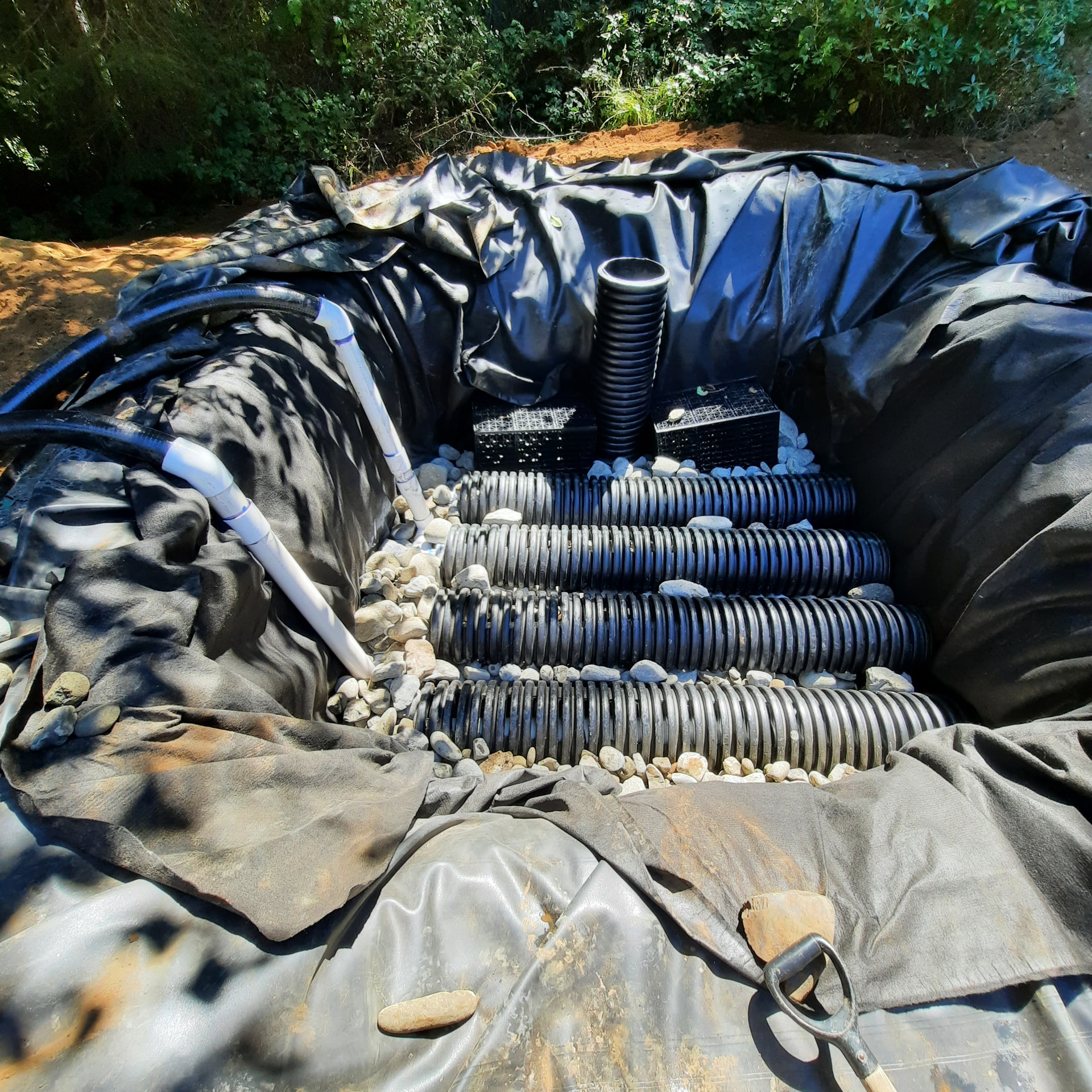
These diagrams illustrate how circulation, flow distribution, and filter capacity work together in a pond system. Water is distributed beneath the filter and moves upward through rock and biological media before returning by way of a spillway, waterfall, or creek. The illustrations explain operating relationships rather than a specific product, configuration, sizing rule, or construction detail.
Repair, Upgrade, or Rebuild?
Repair
Appropriate when the pond structure and major systems remain sound and the problem is isolated.
Upgrade
Appropriate when the pond works but would benefit from improved filtration, circulation, pumps, lighting, access, or maintenance features.
Rebuild
Appropriate when the original pond is fundamentally limited by shallow depth, poor structure, no practical filtration, failing edges, inaccessible equipment, or design problems that cannot be corrected efficiently through smaller repairs.
The cheapest immediate fix is not always the lowest-cost long-term choice.
Good Pond Lighting Should Last—and Be Repairable
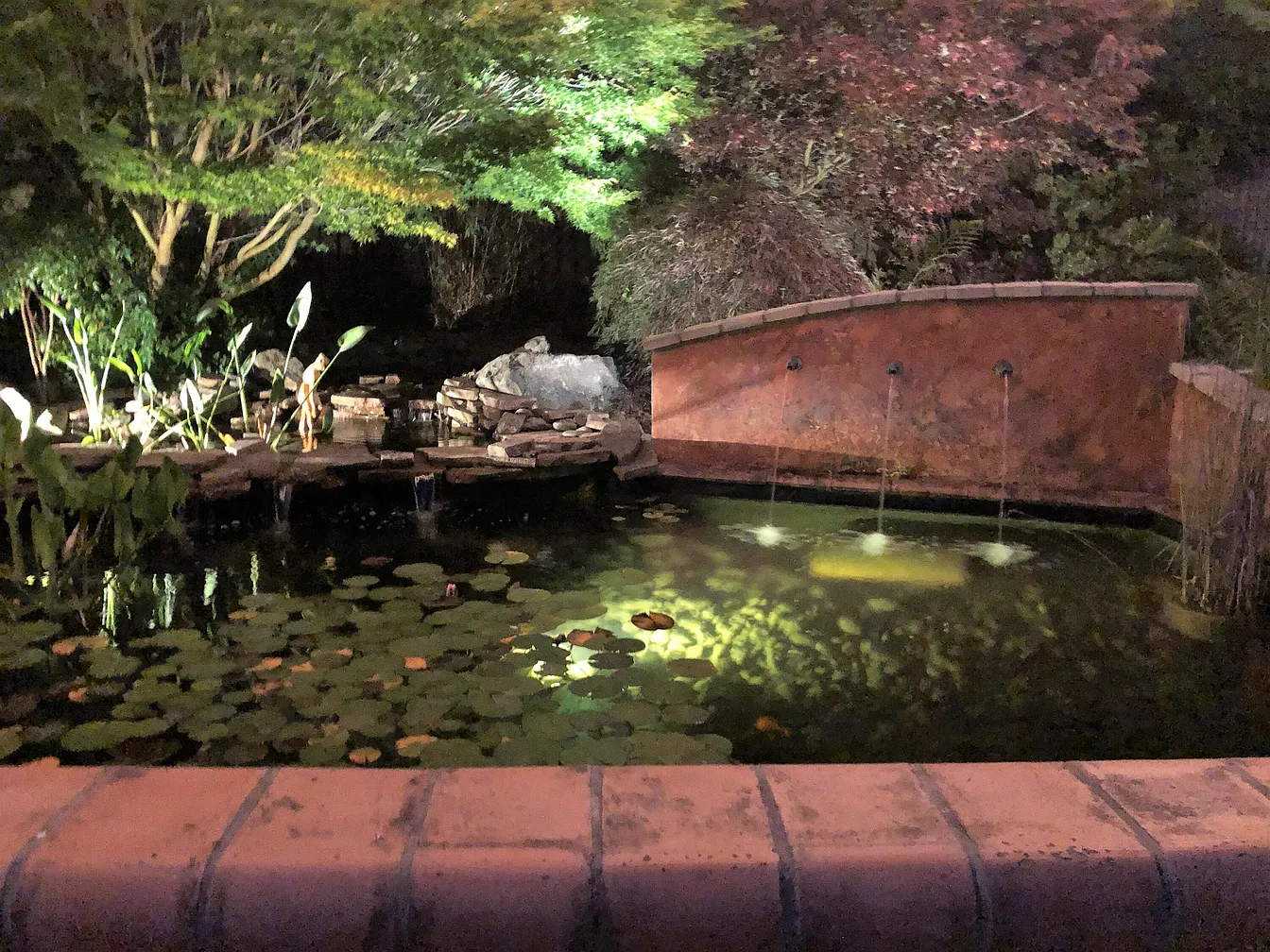
Water-feature lighting can extend enjoyment after dark and improve the relationship between the pond and surrounding landscape.
Living Earth favors durable lighting components and repairable systems where practical. Older high-quality fixtures may sometimes be rebuilt or serviced rather than discarded, even after many years of use.
Moving Water Without an Open Pond
Pondless waterfalls and creeks can bring sound, movement, and visual interest to places where an open pond is not necessary or desirable. They can work well near:
- decks
- patios
- entries
- small gardens
- slopes
- and compact spaces
They may also be integrated with grading or other site conditions rather than treated as isolated decorative features. Where runoff and grade are already part of the problem, see Drainage & Site Water →
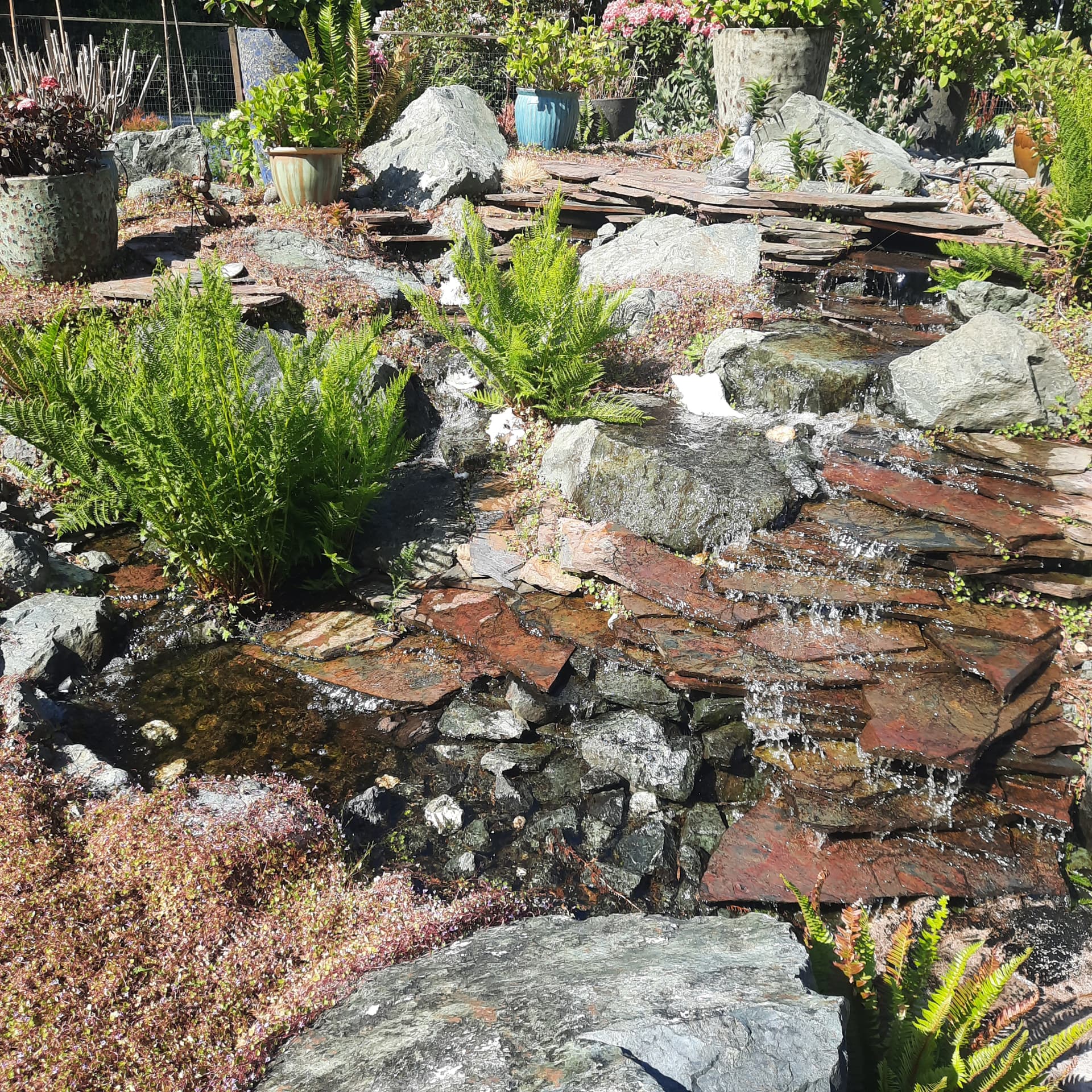
A pondless waterfall provides the movement and sound of running water without an open pond. Water disappears through stone into a hidden underground reservoir, then recirculates to the top of the stream.
Mature Ponds Often Deserve Renovation, Not Replacement
An older pond may already have:
- established stonework
- mature planting
- good shape
- useful depth
- valuable fish
- and a strong relationship to the landscape
In those cases, the better project may be to preserve the character while updating:
- pumps
- filtration
- circulation
- lighting
- edges
- plant management
- and maintenance access
A mature pond has history. Renovation should respect what is still working.
Pond Care Works Best With History
Returning to the same pond over time creates useful context. Knowing:
- when it was built
- when it was last cleaned
- what pumps were installed
- how the fish population changed
- where leaks or settling occurred
- which lighting components were used
- and how the owner actually maintains the pond
can make future decisions more informed. This is one reason Living Earth values long-term pond relationships rather than treating every visit as an isolated service call.
Some Pond Owners Want to Do Part of the Work Themselves
Living Earth can sometimes help owners with:
- system planning
- pump and filtration decisions
- layout
- troubleshooting
- materials
- equipment selection
- renovation strategy
- or professional involvement only during critical phases
The appropriate level of involvement depends on the pond and the owner’s experience.
Before You Build
A successful new pond should consider:
- intended fish load
- location
- surrounding grade and runoff
- sun and shade
- view from the house or outdoor living areas
- soil conditions
- pond shape
- depth
- circulation
- filtration
- access
- maintenance
- edge treatment
- overflow
- planting
- lighting
- power
- and the larger landscape
Low areas may seem like natural places for ponds because they collect water. That can also mean they collect sediment, nutrients, organic debris, and runoff from the surrounding property. A pond location should therefore be chosen deliberately rather than simply placed in the lowest spot.
Many Owners Wish They Had Built the Pond Larger
There is often an economy of scale in pond construction. Many pumps, filters, skimmers, plumbing components, and other system elements can support more pond volume than the smallest initial concept requires.
Once the main system is appropriately planned, increasing pond size may add more cost in excavation, liner, underlayment, stone, and finish materials without requiring an equivalent increase in every mechanical component.
The goal is not to oversize every pond. It is to consider future expectations before the pond is finished and difficult to expand.
Aquatic Plants Are Usually Vigorous by Nature
A newly built pond can initially look underplanted. That often creates the temptation to install too much. Over time, aquatic plants can spread quickly. It is generally better to:
- start with restraint
- allow plants room to mature
- choose species deliberately
- and avoid aggressive plants that are difficult to contain
A natural pond tends toward accumulating organic material and vegetation over time. Planting should support the system rather than accelerate that process unnecessarily.
Intake Design Matters
Bottom drains can be very useful, particularly in larger ponds and heavily stocked fish systems. They can also add:
- plumbing
- penetrations
- installation complexity
- valves
- and maintenance considerations
Another approach is a bottom-intake system used together with a surface skimmer. When incorporated during initial construction, lower intake plus surface skimming can improve:
- circulation
- debris movement
- low-level water pickup
- and overall system performance
The appropriate approach depends on the pond.
Pond Shape Affects Water Movement
Simple pond forms are generally easier to circulate evenly. Highly irregular shapes may create:
- stagnant areas
- debris pockets
- warm zones
- and sections that receive poor circulation
Interesting shapes are still possible. The circulation system simply needs to be designed around the geometry rather than assuming one return will move water through every area.
Depth, Shade and Circulation Affect Temperature Stability
Water temperature is influenced by:
- pond depth
- total volume
- sun exposure
- shade
- circulation
- waterfalls
- creeks
- and seasonal weather
Larger, deeper ponds generally resist rapid temperature changes better than very small shallow systems. Large shallow creeks or waterfalls can also expose significant water volume to warm air and sunlight before that water returns to a relatively small pond. These relationships should be considered during design.
Separate Everyday Filtration From Show Flow
Larger ponds may benefit from separating essential filtration flow from high-volume visual flow. One practical approach is:
Smaller Pump — Continuous Operation
Used for:
- filtration
- circulation
- biological treatment
- efficient everyday system operation
Larger Pump — Visual Operation
Used when additional flow is wanted for:
- waterfalls
- creeks
- stronger movement
- or entertaining
This can allow essential filtration to operate efficiently without requiring the highest-energy pump to run continuously.
Renovation and Rebuild Are Different Problems
Long-Term Pond Renovation
- Living Earth had performed major work about 15 years earlier
- sediment, aging components, and neglect reduced performance
- pumps and filtration were replaced
- useful components were repaired
- lighting was updated
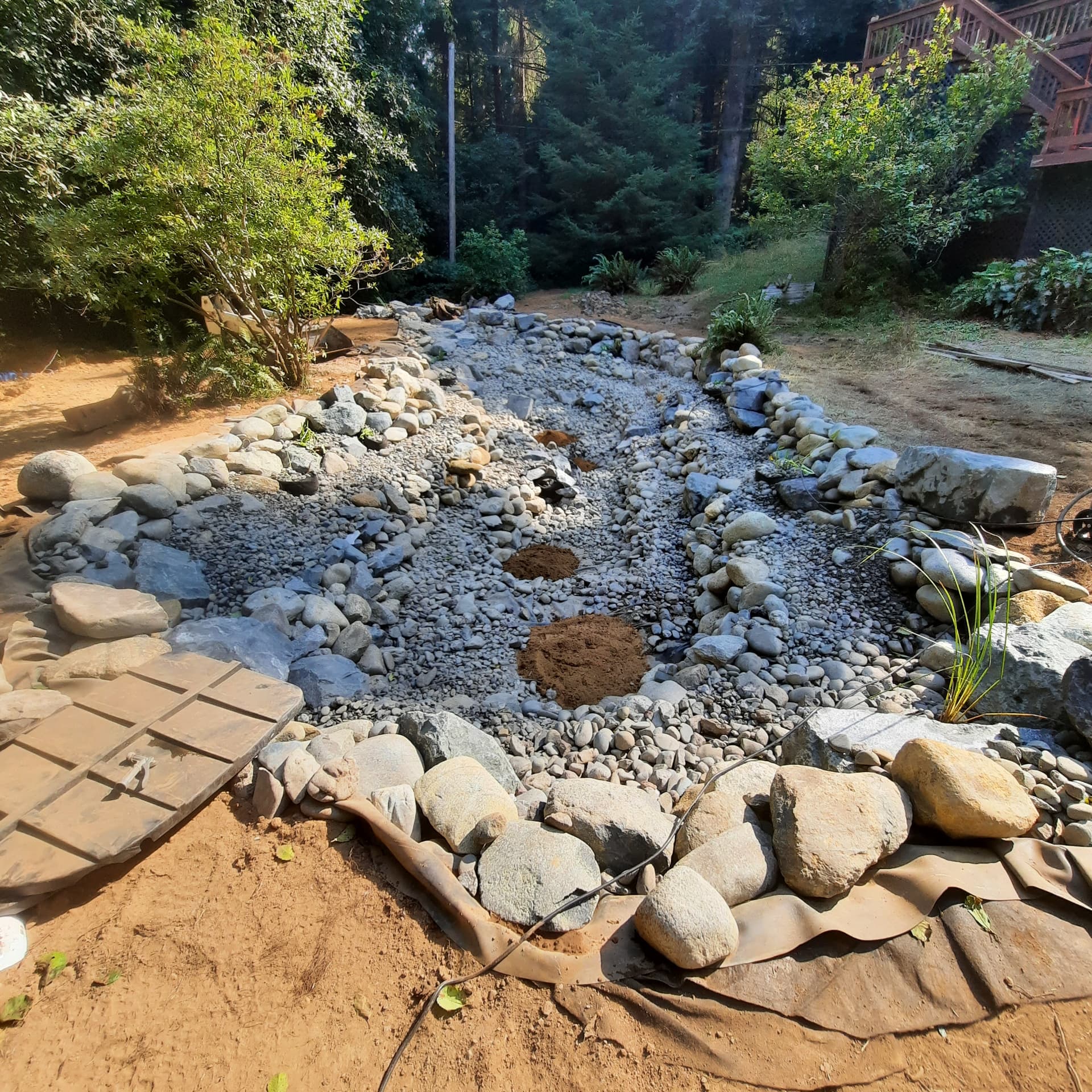
Full Pond Rebuild
- original pond was too shallow
- no filtration
- fish population had grown
- fish were maintained in temporary holding
- pond was deepened
- filtration was added
- two-pump operation provided efficient continuous filtration and higher creek flow
Electrical Work and Other Specialist Needs
Living Earth handles pond and landscape system work within appropriate scope. Electrical work itself should be performed by the appropriate qualified electrical professional when required. Depending on the project, other specialist input may also be appropriate.
Keep the Pond—Fix the Right Problem
If you already know what service or repair your pond needs, start with a project request.
If you are unsure whether the issue is maintenance, filtration, circulation, equipment, water quality, or the pond design itself, a site consultation can help define the next step.
For questions not answered here, start with Consulting & Site Assessment.
A pond that is easier to understand is usually easier to maintain.