
Pondless Waterfalls & Streams
Moving water and natural sound without an open pond, recirculated through a concealed reservoir.
Ponds & Water Features
Living Earth Landscapes designs, builds, and renovates natural-looking ponds, pondless waterfalls, streams, and custom water features throughout Humboldt County.
Since 1997, Keith Hamm has combined skilled stonework and careful water movement with serviceable circulation, filtration, and access for long-term maintenance.
Moving water and natural sound without an open pond, recirculated through a concealed reservoir.
Ponds planned around the site, intended use and the surrounding landscape.
Improve depth, edges, stonework and systems while keeping what still works.
Pumps, lines, filtration and equipment access sized for long-term maintenance.
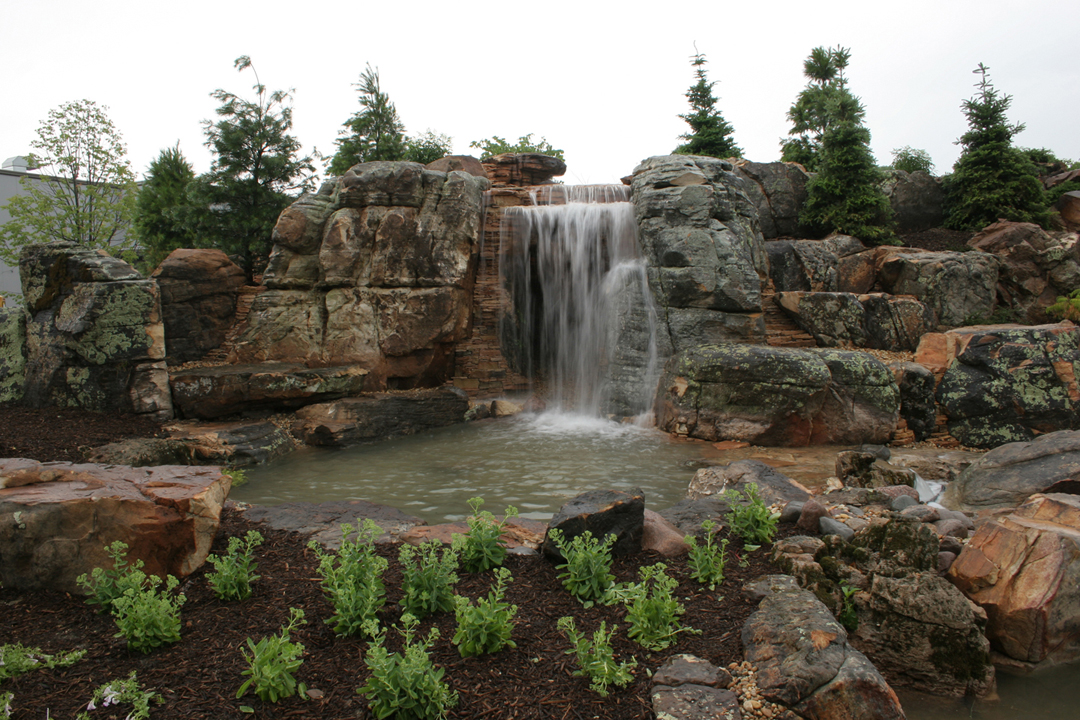
A pondless waterfall provides the movement and sound of running water without an open pond. Water disappears through stone into a hidden underground reservoir, then recirculates to the top of the stream.
Pondless features can work especially well near patios, entries, decks, slopes and compact garden spaces. Their form can range from a short waterfall to a longer natural-looking stream shaped into the property.
Water passes through the stone into a concealed lined reservoir, moves through the water-storage structure to a serviceable pump, and returns through a buried line to the top of the stream.
Tap or click the illustration to enlarge.
Conceptual illustration; reservoir capacity, pump selection, pipe sizing and final construction depend on the feature and site.
Living Earth Projects
A water feature works best when it belongs to the larger setting. Its scale, stone, planting, paths, structures and viewing areas should feel connected rather than assembled as separate pieces.
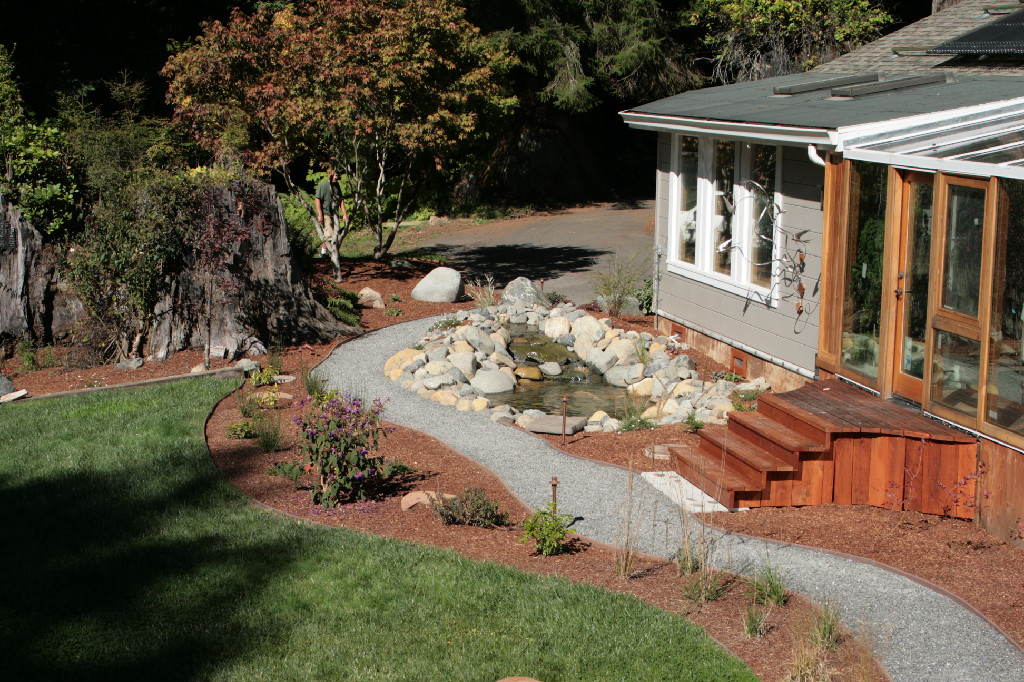
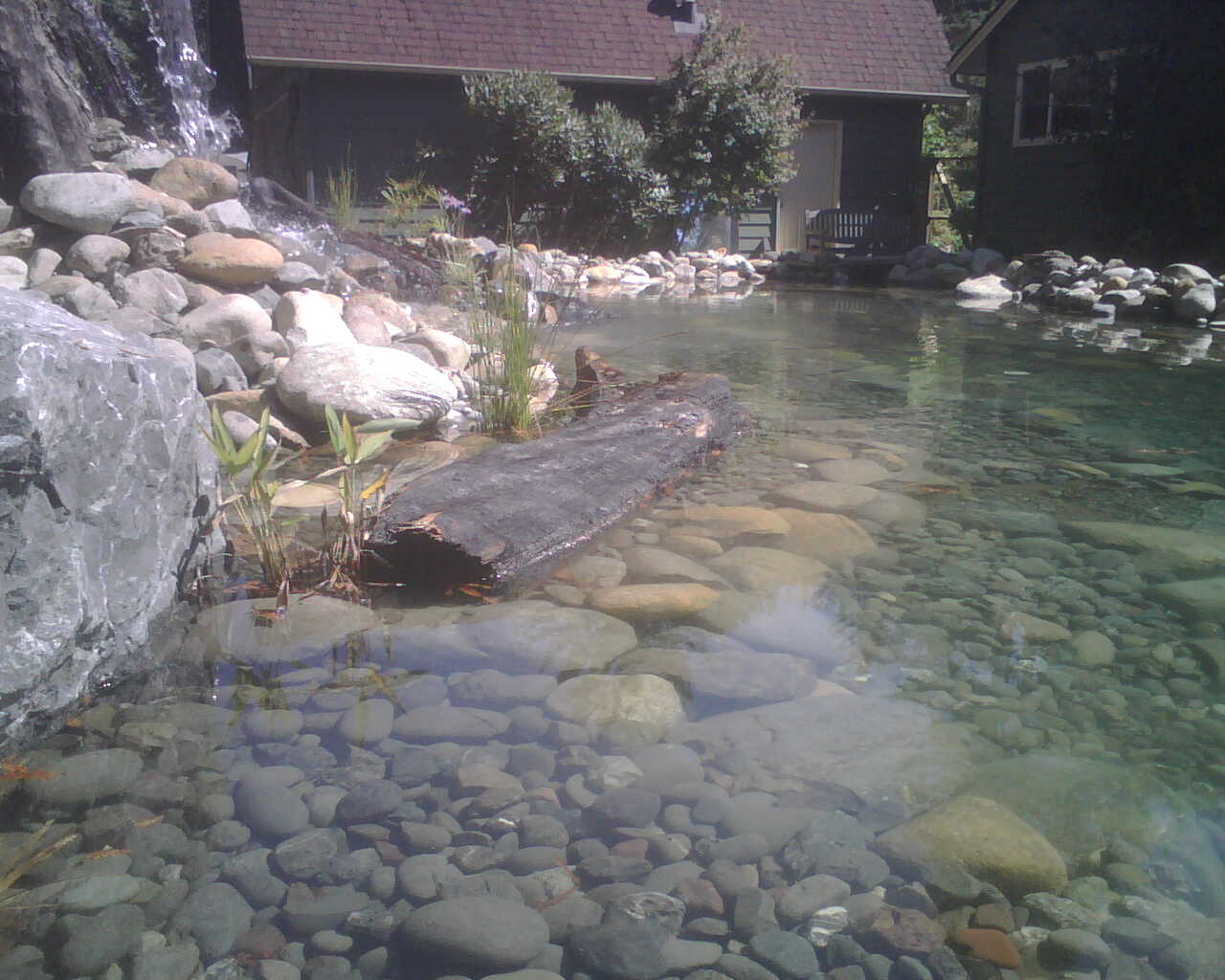
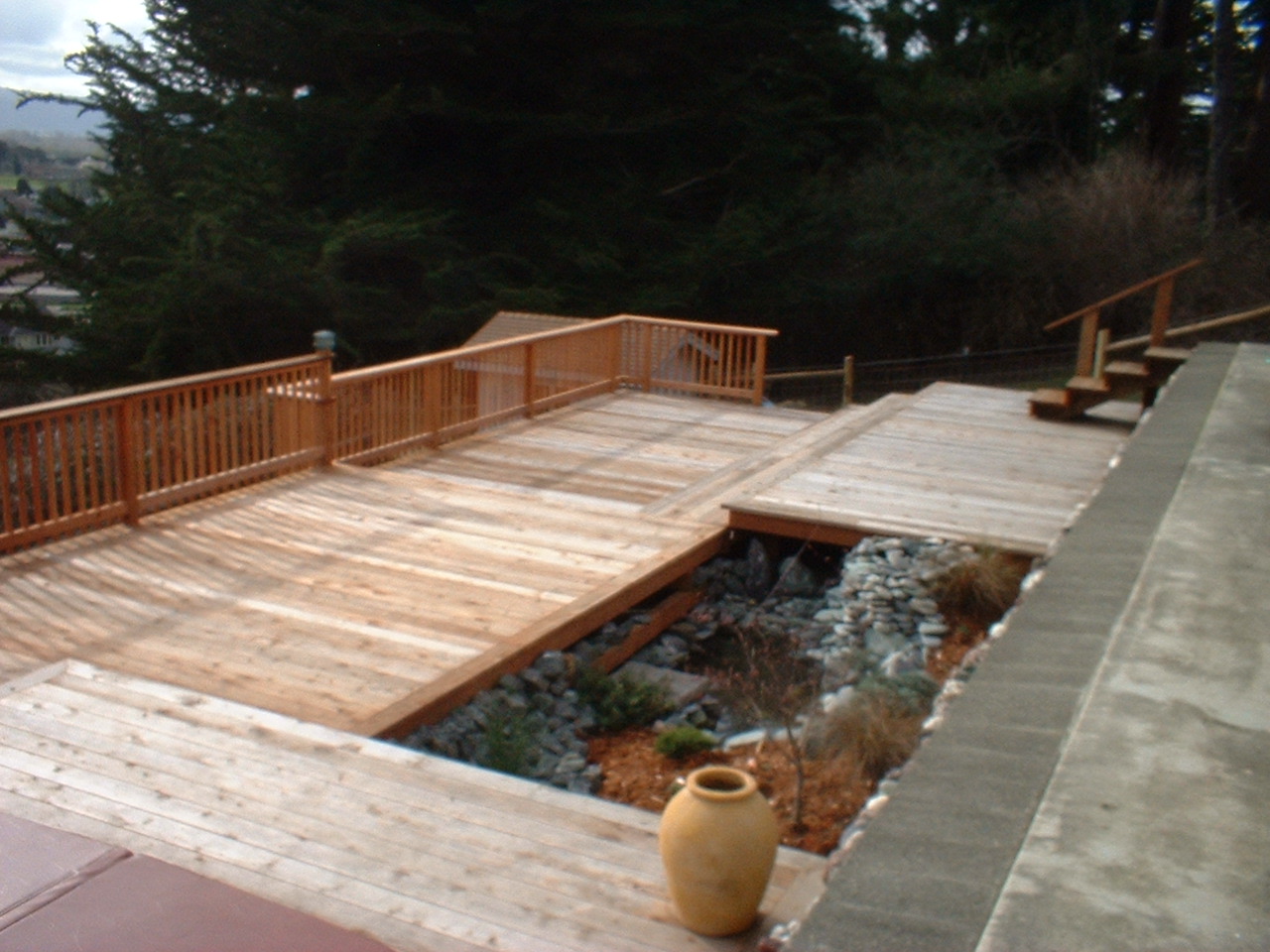
Living Earth project archive.
Water features are shaped by more than appearance. Living Earth considers how the feature will sit in the property, how water will move, where equipment can be serviced and how the feature will age.
An older pond may already have useful depth, mature planting, established stonework or a strong place in the landscape. Renovation begins by identifying what still works, what limits the system and whether focused upgrades or a complete rebuild make better long-term sense.
For visitors who want to understand filtration, circulation, maintenance, water quality or pond construction principles in more detail, Living Earth's technical guidance provides the next layer.
Living Earth’s experience includes both specialized technical consultation and hands-on participation in water-feature construction beyond the typical residential pond.
During development of Sequoia Park Zoo’s river otter habitat, the project’s engineering firm brought Keith Hamm of Living Earth Landscapes in as a technical consultant on liner durability options. Because river otters are powerful diggers, the habitat required a more resilient containment approach than a typical decorative pond.
The completed otter habitat became part of the zoo’s award-winning Watershed Heroes exhibit. It was part of a broader habitat-development program that also includes the zoo’s raptor and eagle habitat and its later bear habitat.
Learn about Watershed Heroes at Sequoia Park Zoo (opens in a new tab)
Keith Hamm represented Living Earth Landscapes as a participant in Aquascape’s 2008 “World’s Most Extreme Pond Build” at Aqualand in St. Charles, Illinois.
The five-day invited industry build brought together contractors, retailers and water-feature professionals to construct a 250-by-90-foot, approximately 300,000-gallon feature. The completed system incorporated 10-inch circulation lines, wetland filtration, waterfalls reaching 10 feet, a viewing grotto and more than 1,500 tons of stone.
Keith’s hands-on participation provided direct experience with the relationship between large-scale excavation, major stone placement, high-volume circulation, filtration, equipment access and the finished movement of water.
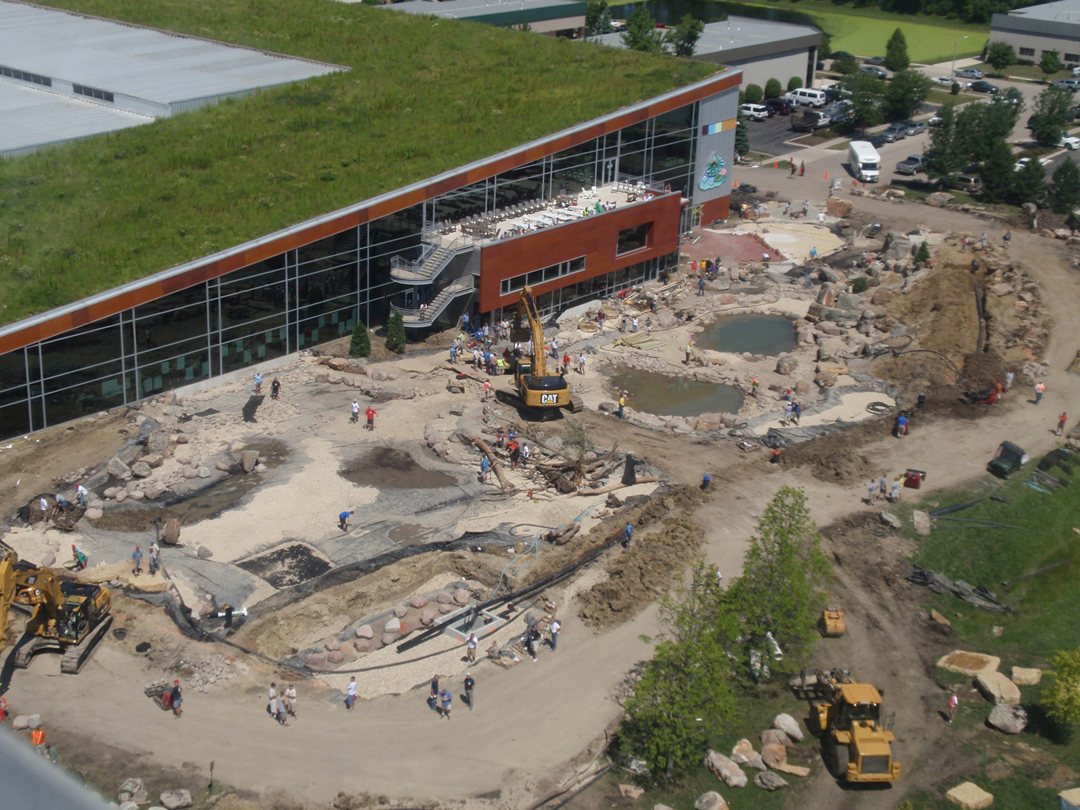
Keith Hamm participated in the five-day build on behalf of Living Earth Landscapes.
Photos: Aquascape; retained from Living Earth’s former website and reused with permission.
Start with what you know. Living Earth can help define whether the appropriate next step is a project estimate, renovation plan, technical consultation or site review.